LOVATO TEXAS UPDATE
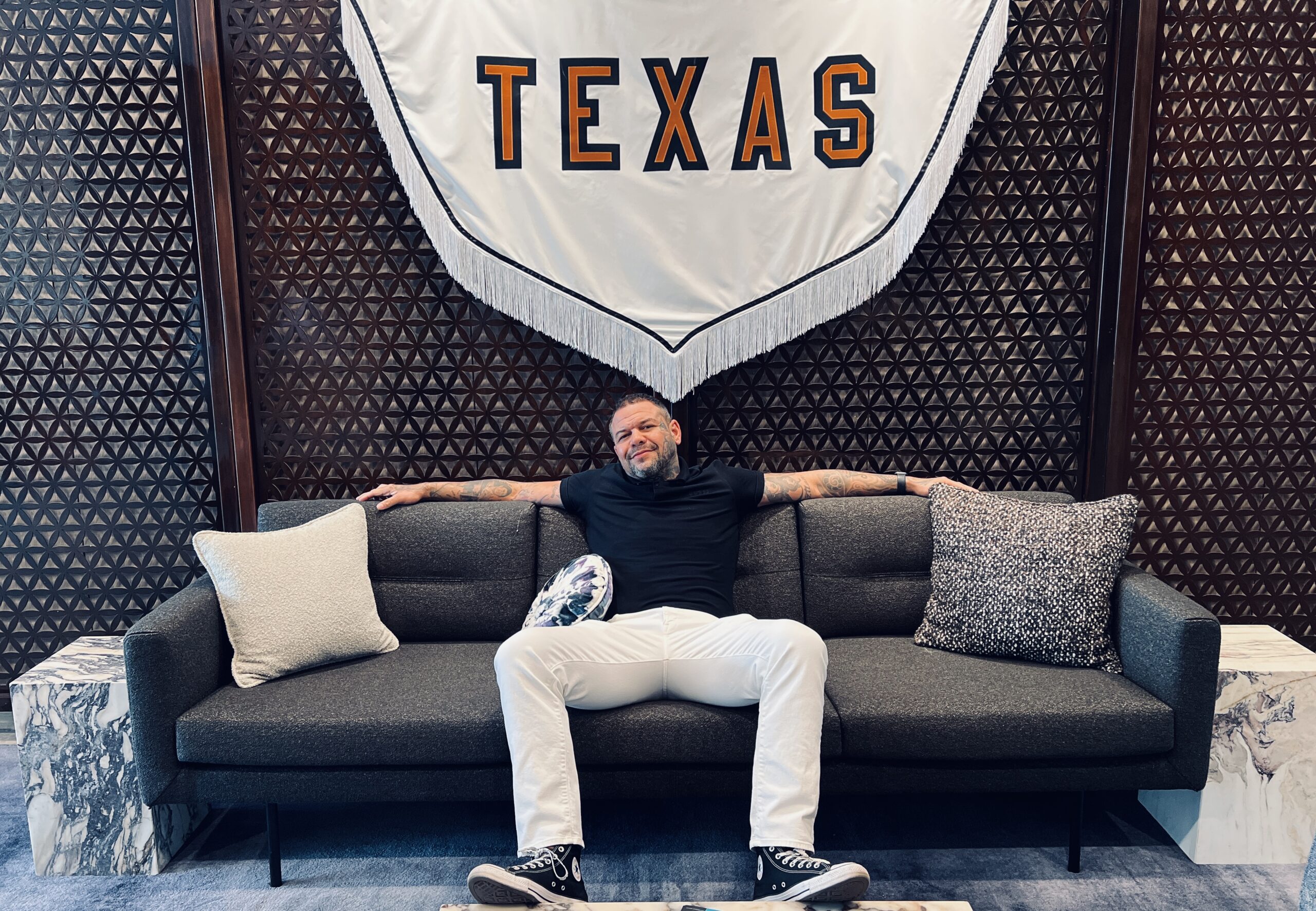
UT Austin: First Semester Reflections
Finishing my master’s program at the University of Wyoming felt like a quiet rebellion – my own victory over the elitism of the contemporary art world. Instead of taking the expected path from a BFA into an MFA, I shuffled my footwork sideways into American Studies and built my own version of an MFA through interdisciplinary study, community collaboration, and the support of the University of Wyoming American Studies Department, the UW Art Department, and the UW Art Museum. I carved out a space that didn’t exist before, a space where art could breathe outside of institutional expectations.
So why continue into a PhD? Why American Studies, not Art History? And why now?
The truth is: I don’t need a PhD to be an artist. I’m not here to perfect technique or produce objects for a market. My goals reach beyond personal success. I want my art to matter, not just in the micro-world of my immediate community, but across broader landscapes where conversations about mental health, survival, and resilience are urgent.
A PhD gives me the language to articulate what I already feel in my bones: that art can contribute to suicide prevention, that creative practice can shift the terrain of mental health, and that lived experience must sit at the heart of research and public discourse. American Studies lets me approach art from the ground up…through culture, place, history, body, and emotion rather than through an elitist frame that defines art history. Here, I can critique the world while staying human in my analysis. Here, my lived experience in martial arts folds into my research and creative practice. Everything I’ve learned, in the fight cage, in the studio, in community spaces pulls me toward a larger question I can’t ignore.
What is art?
This question feels infinite. For me, art refuses containment. It is a fluid language that crosses race, gender, power, and class…a voice that whispers, shouts, and even moves in silence. Art holds wounds we can’t name and offers solace when words fail. It stitches together little pieces of the human spirit with color, texture, vibration, form, sound, and embodied memory. To me, it is deeply personal and profoundly communal. It transforms pain into beauty, chaos into meaning. And to understand art’s complexity is to hold all its theories, histories, contradictions, and possibilities. I need a landscape wide enough to carry my questions. American Studies gives me that.
The Second Act
Coming back to school in my forties feels like the opening of my Second Act, not a restart, but an intentional pivot. A moment where I stepped toward the life I always sensed was waiting for me but didn’t yet have the grounding, clarity, or language to enter. A Second Act is not about going back. It is about breaking forward.
When I think about this Second Act, I think about the lineage I come from, like people whose reinventions reshaped entire cultures:
Frida Kahlo pivoted from a medical path to painting after the near fatal bus accident that shattered her body. Her Second Act transformed pain into art that still shapes the world.
MF DOOM, who vanished from the industry after the devastating loss of his brother, a loss that I connect to all too well, only to re-emerge behind a metal mask with an entirely new sonic universe. His Second Act was not a comeback, it was a rebirth. A transformation built from loss, grief, and the kind of pain that forces you to recreate yourself from the inside out.
Randy Couture, one of the oldest champions in UFC history, who proved that age is not a ceiling. He won titles in his forties, long after people counted him out because he was old. His Second Act was a lesson in discipline, endurance, and refusing to be counted out.
These are not stories of late blooming, they are stories of continuing. Of stepping into deeper into more intentional versions of themselves.They remind me that a Second Act is not about timing, it is about will, about refusing to be trapped by the first version of your story. My own Second Act began when I decided to return to academia, not because I needed degree to validate my art, but because I needed a bigger canvas, a sharper language, and a way to connect my creative work to loss and grief, to mental health and suicide prevention. This PhD is part of my healing. Part of my discipline. Part of my responsibility to the communities I care about. And like any fighter stepping back into the cage, or any masked MC building a new mythology from scratch, this Second Act is about rediscovery. Renewal. Re-entry with intention.
I’m still becoming.
I’m still building.
And this Second Act is just beginning.
Arriving in Austin
Leaving Wyoming after graduation was harder than I expected. I spent the summer in Albuquerque with family, grounding myself at home, but I realized I was not quite ready to return. I am still grieving. Still shaping myself. Still healing. Being with family helped, but something inside me understood it was time to move toward what was next.
When I arrived in Austin, something clicked immediately. It felt right…like I had stepped onto a path that had been waiting for me to catch up.
My first semester has not been easy. I have had meltdowns, waves of imposter syndrome, and moments where the weight of studying felt overwhelming. But I have had one anchor keeping me grounded: martial arts. Jiu jitsu has kept me sane, centered, and connected to my body when my mind was struggling to keep up.
I’ve also thrown myself into community work. Volunteering at the Out of the Darkness Walk reminded me why I do this research, why suicide prevention and creative resilience matter. Volunteering at the Austin Studio Tour plugged me into the city’s art world, where artists refuse to fit into neat categories. Their weirdness and refusal to be boxed in made me feel at home.
I have not been very social. I am an introvert and school has taken everything out of me, but I am hopeful. I want to build relationships here. I want community. And somewhere deep in my chest, I have a good feeling about this place.
Austin feels familiar, not just as a city, but as a stage for transformation. A place not just to study, but to become. I do not know exactly what comes next, but I am excited for it.
My Second Act is in motion.
And I’m ready for whatever it brings.
WYOMING UNITE EVENT REFLECTION
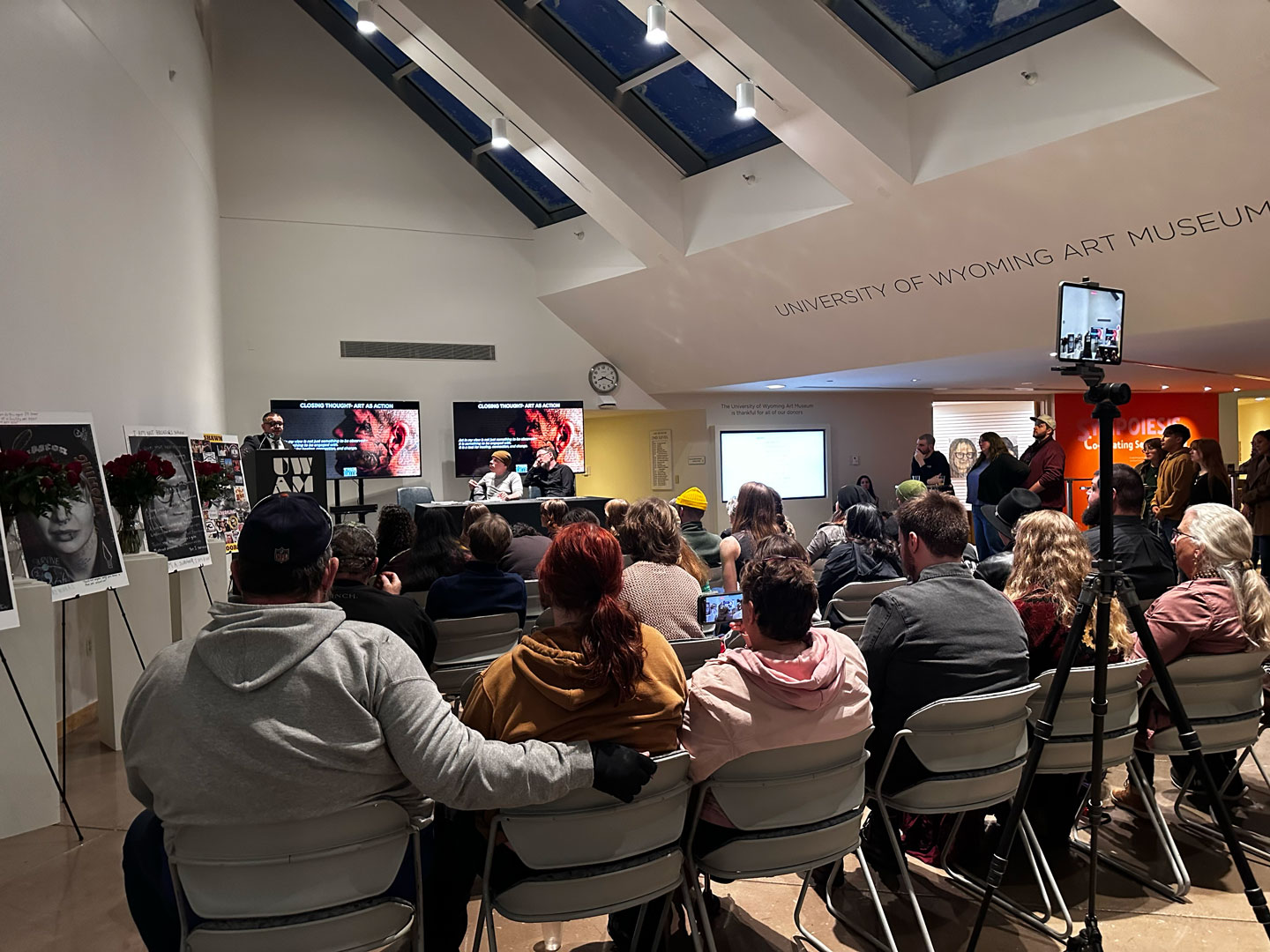

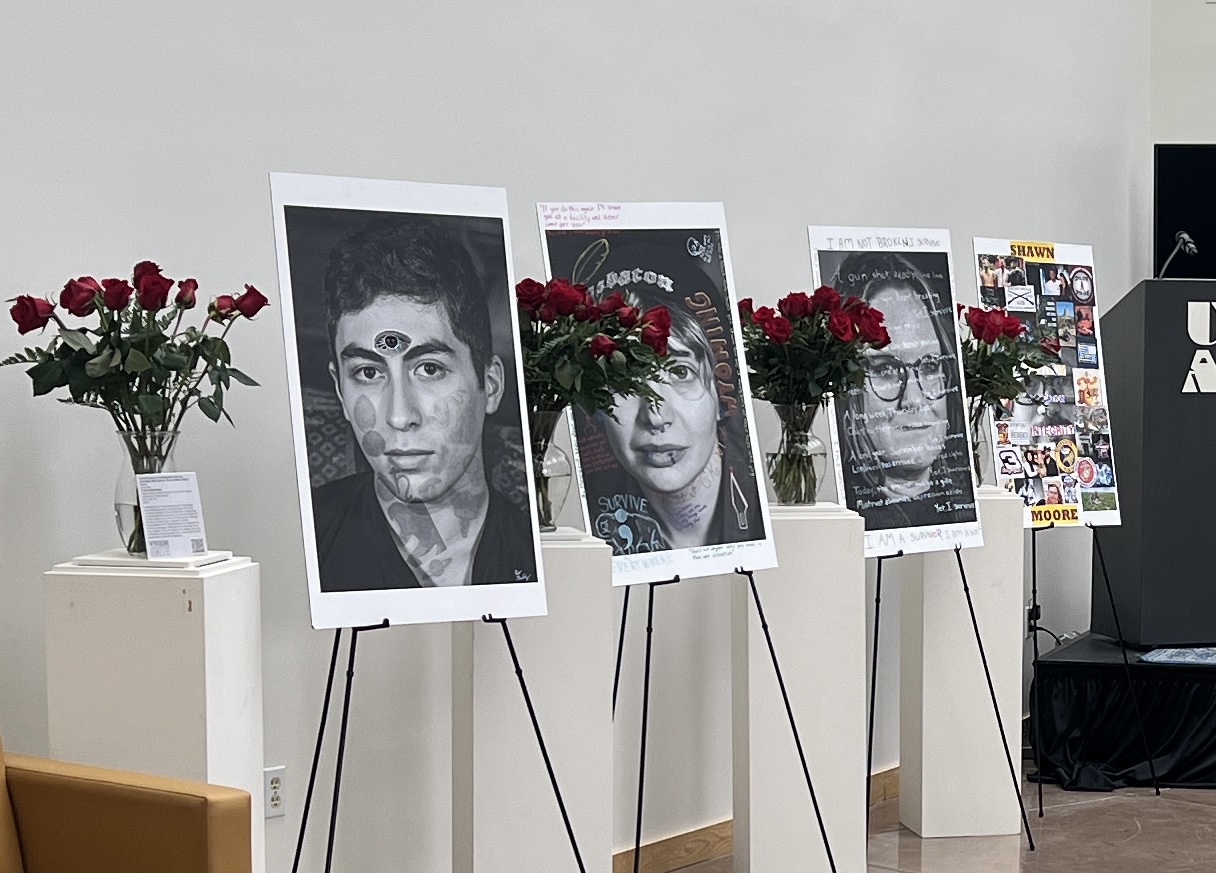

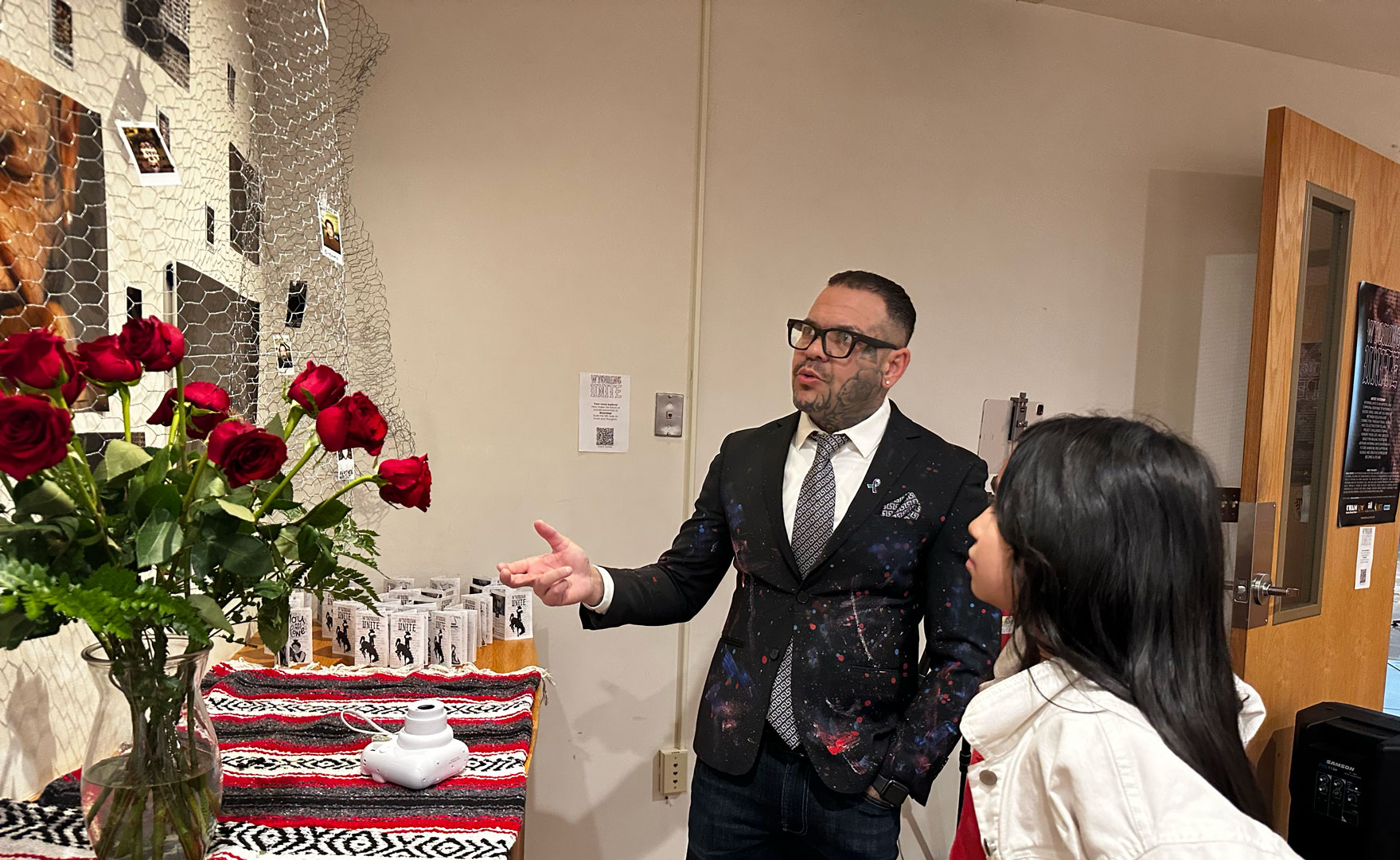
The University of Wyoming Art Museum served as an incredible partner for this event, providing me with a space to host an unconventional thesis exhibition. I am truly grateful to the museum director Nicole Crawford for believing me and giving me the opportunity to do something outside the box. By breaking away from the standard month-long or longer exhibition format, which typically serves the transactional goals of the art market, the pop-up structure challenges the idea that art’s value is tied to its saleability. Instead, it emphasized art as an immediate, communal experience—something to be felt, shared, and remembered in the moment. This ephemeral nature heightened the urgency of the exhibition’s message, encouraging viewers to be fully present and engage with the works and the issues they addressed. I aimed to create a type of, “you had to be there” kind of experience.
This fight for mental health has been a “Forever War” in American culture. In reminiscence of Kapadia’s Insurgent Aesthetics’ art as resistance style framework, the Wyoming Unite exhibition seeks to reimagine the role of the art exhibition as catalyst fighting for social change rather than a mere showcase of objects for purchase. In this way, the pop-up format becomes a radical act of resistance against a system that often excludes marginalized voices and reduces art to a luxury commodity. It aligns with the ethos of Artivism, using art as a process to foster dialogue, healing, and solidarity—not as a product. By rejecting the depersonalized frameworks of the medical-industrial complex, which prioritize pharmaceutical and profit-driven interventions over community-based care and interventions, Wyoming Unite emphasized the power of collective storytelling and creative expression in a nonclinical approach to humanize the experiences of those impacted by suicide.
This approach also created a sense of accessibility and inclusion, removing barriers often associated with traditional museum gallery spaces. The exhibition wasn’t about selling art; it was about sharing stories, addressing trauma, and building a collective sense of purpose around a pressing social issue. By prioritizing community impact over commercial success, The Wyoming Unite pop-up thesis exhibition exemplified a reimagining of how art can serve the public good and how exhibitions can transcend their physical spaces to create lasting emotional and cultural resonance. In a way, it was my gift to Wyoming for allowing me the time here in their great state.
After months of dreaming, planning, and preparation—it was finally time. Mid-April had surprised us with unusually warm weather for Wyoming, as if nature itself had aligned with the vision. Everything seemed to be falling perfectly into place… until, suddenly, Wyoming reminded us who’s really in charge. A snowstorm swept in like a plot twist, wind gusting through our expectations with icy defiance. I was shaken—not just by the storm, but by the realization that some of my family, traveling from New Mexico and Denver, wouldn’t make it. My daughter and son-in-law were among them, and their absence stung. But as they say—the show must go on because in Wyoming the snow will go on.
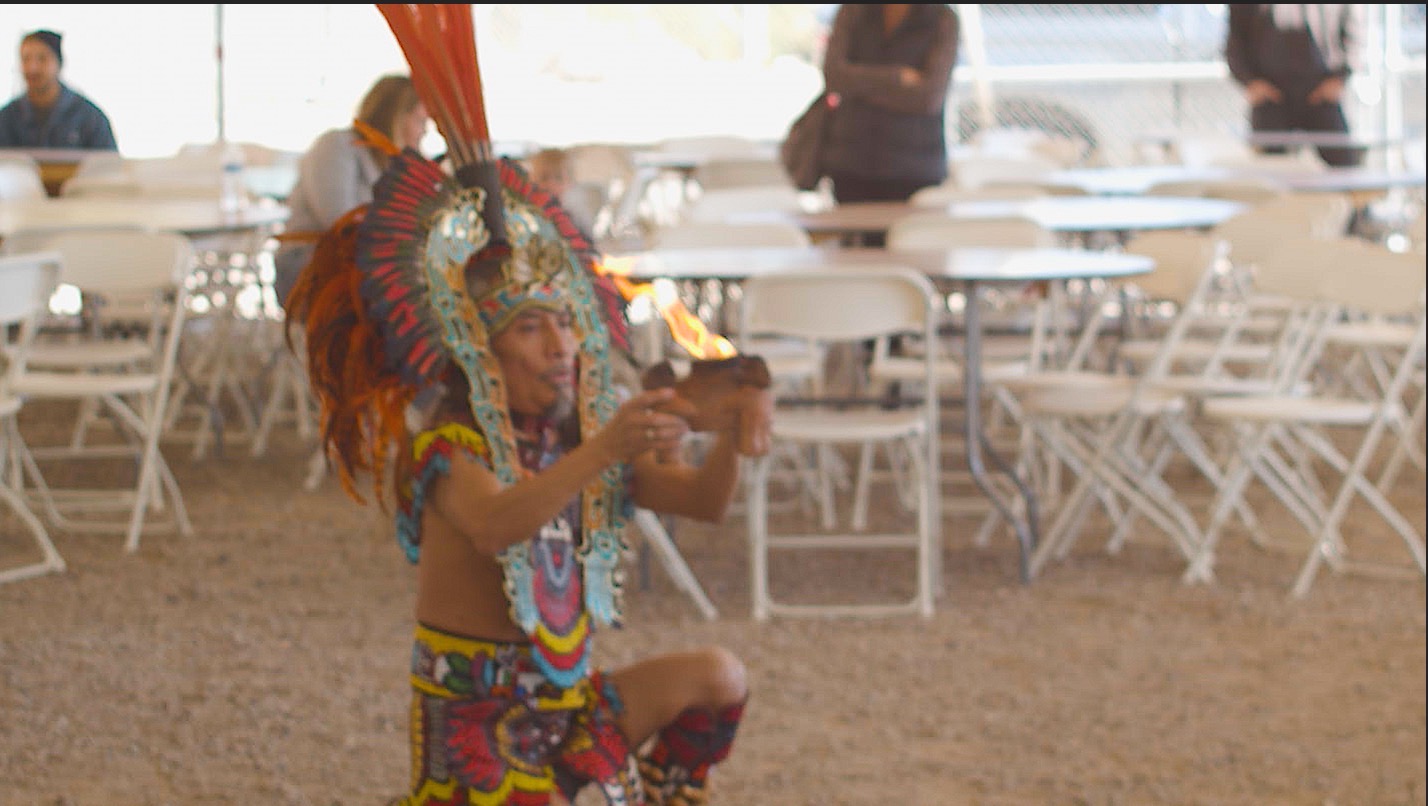
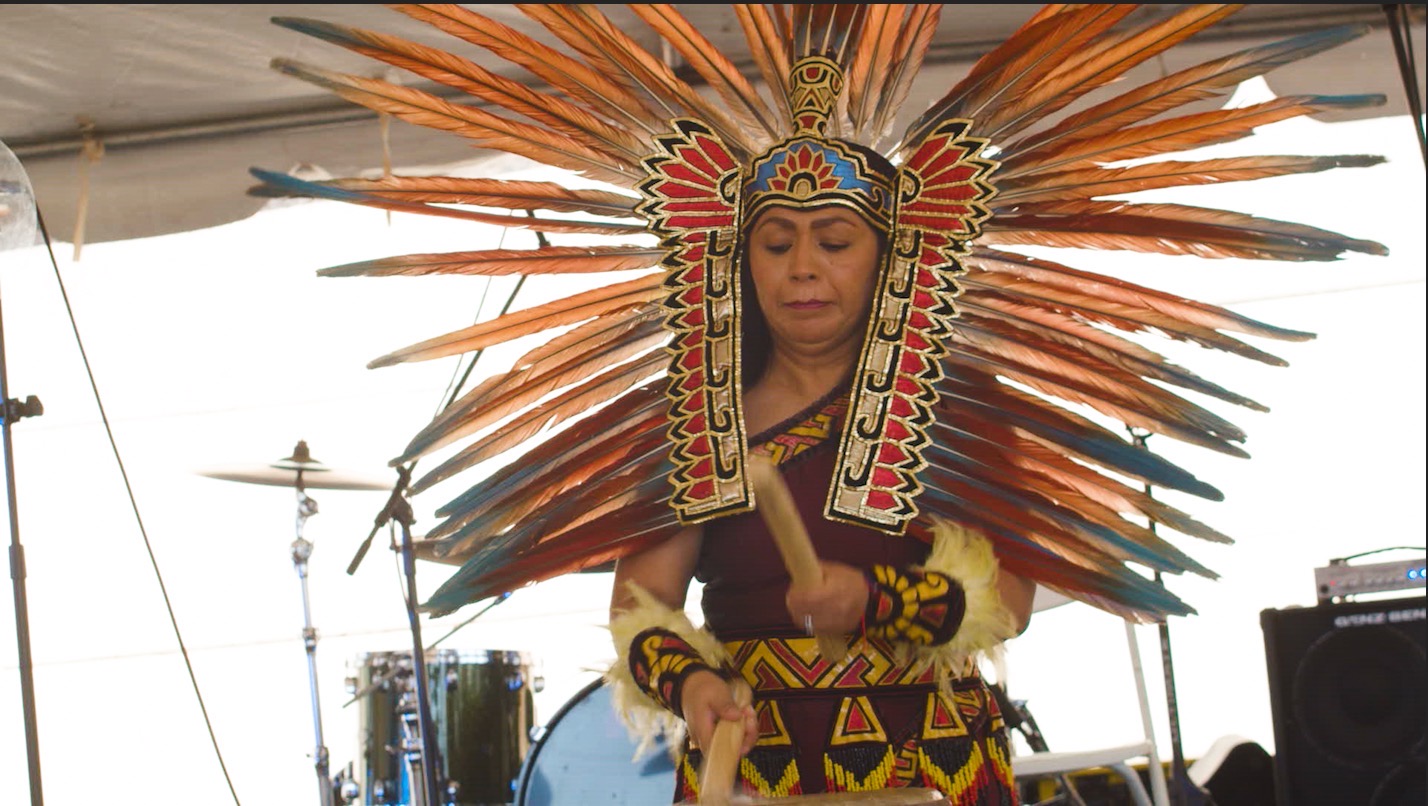
On that cold, windy, snowy night, people of Wyoming gathered—braving the storm—to unite through art. We began with a blessing from some of my extended family who made it from Denver: Kalpulli Mikakuika, a traditional Aztec dance group, performed a ceremonial danza that stirred the spirit of the space. The powerful sound of the conch shell trumpet “quiquiztli” and Mexica drums cracked through the winter air like a heartbeat, transforming the museum into sacred ground. Their energy didn’t just bless the room—it ignited it.
As the echoes of ceremonial drums faded, I cued a heartbeat track through the sound system—a nod to Burque Unite, but also my own way of grounding this moment in Wyoming, as if pressing two fingers to its wrist to feel for a pulse. The air vibrated with anticipation.
Pizza was laid out in an informal buffet—a kind of communal offering, like a neighborhood pizza party gathering. And just as people settled into this rhythm, the performance broke through.
It began with a yell—raw, unfiltered my voice projected deeply through the museum: “I woke up this morning, with the dark side of myself…”
At first, some people didn’t know what was happening. But as soon as I stepped forward, all dressed in white, something shifted—the crowd instinctively gave me space. A thick blue tape stretched across the glossy concrete floor, outlining a stark 15-foot boundary—like a silent warning: Do not enter. This is the area of pain and struggle, the zone of violence and vulnerability. It marked the space where the fight would unfold, where pain would be performed. The line didn’t just set the stage—it heightened the tension in the room. It told the audience without words: You can watch, but you can’t intervene. You can’t save him. I wasn’t just talking; I was confronting the room, performing something real and uncomfortable. The tension was real. I was fully in it, channeling something raw, trying to hold up a mirror to everyone there.
I was a little nervous about how the performance would land, especially in a museum setting. The contrast between the clean, quiet gallery space and the intensity of the violence in the performance felt risky. I worried it might trigger or offend someone. But as I looked around during the performance, it seemed to connect with people in a deeper way. The audience wasn’t turning away—they were leaning in—shedding tears.
I fed off their energy, watching their reactions, reading their body language as tears dripping down my face. It helped guide my movements and tone. To do this piece, I had to go to a dark, vulnerable place within myself, and it was emotionally overwhelming at times. But I stayed with it because it was cathartic and it reminded me of the metaphorical place I would go during a hard fight. It felt like the edge of death and somehow I would always survive. My students and I delivered a powerful, one-of-a-kind performance—flawless in its execution and unforgettable in its impact. It was one of those rare, electric moments where everything aligned—a you had to be there kind of experience that can’t quite be replicated, only remembered. When it ended, there was this huge roar of applause. It felt like the crowd had been hit with something unexpected—like a knockout punch they didn’t see coming.
I went to change back into my formal professional clothes and prepared for my thesis defense presentation [Fig. 7]. When I stepped out, I was genuinely surprised by the number of people already seated, waiting for the defense to begin. The Director of American Studies shared that this was the most well-attended thesis defense the program had ever seen—a comment that left me deeply humbled. The room buzzed with anticipation. I had spent weeks rehearsing—running the speech over and over with friends and mentors, preparing for this moment. And now, it was finally here.
Something unexpected happened as I began: I barely needed to glance at my notes. The words flowed with ease, as if the material had fully settled into my bones. I was confident, grounded. To my own surprise, I even found moments of humor mixed into the delivery—something rare for someone who usually keeps things serious and internal. It felt like the strongest public speaking performance I had ever given. I was charismatic, composed, and—for the first time—I truly felt like a leader people wanted to follow. I’m proud of how it went.
The Q&A was equally strong. I’ve always felt more at home in conversation than in scripted speech, and that showed. Even when a few curveball questions were thrown my way, I was able to respond with clarity and care—always circling the discussion back to the core of my work: suicide, mental health, and the urgent need for dialogue. The whole experience left me feeling fulfilled, seen, and heard. Time moved faster than I expected. One moment, I was fully immersed in the performance—and the next, I looked up to see a museum staff member gesturing about the time during the Q & A. That’s when I realized we had gone over. What felt like a brief, intense exchange had already run past schedule. We had to end things quickly, even though the energy in the room felt like it could have carried on for much longer.
After the event, people approached me—eager to connect, to reflect, to share. But I couldn’t speak to everyone. We were already in the middle of cleanup, and our time in the museum space had run out. It was hard to step away from that moment of community, knowing it had resonated so deeply.
When I got home, a familiar sensation settled in: the soreness, the fatigue—the kind that comes after a fight. Not just in the body, but in the spirit. My hypothesis had proven true. Artistic intervention does create space for shared vulnerability. It does make room for creative resilience to emerge—not just as theory, but as lived experience. It was a night no one in that room will soon forget.
PRESS RELEASE: WYOMING UNITE
FOR IMMEDIATE RELEASE
Wyoming Unite: A Groundbreaking Art and Research Initiative Confronting the Suicide Epidemic in Wyoming
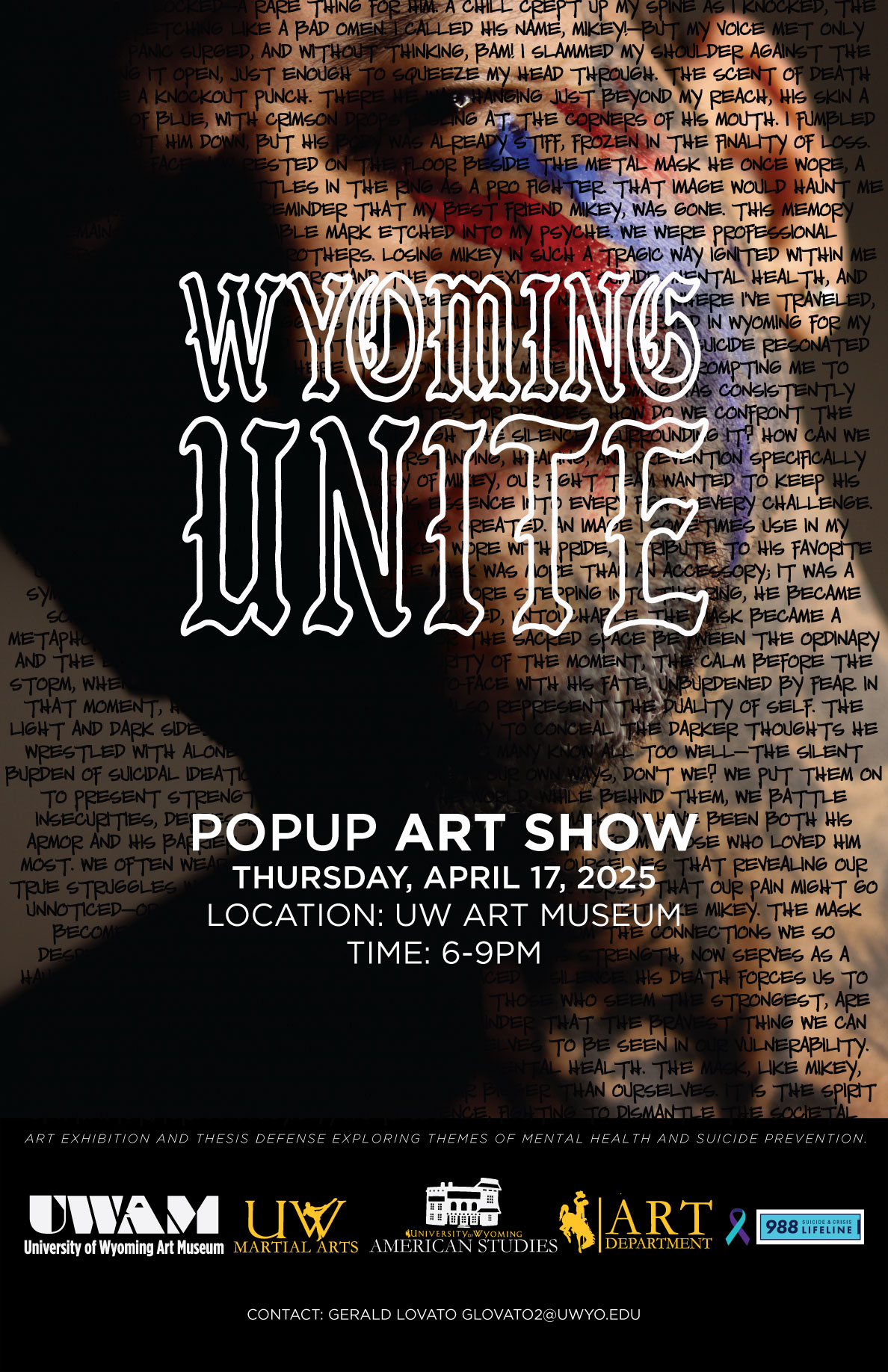
Laramie, WY – March 13, 2025 – Wyoming Unite is set to challenge traditional approaches to suicide prevention through a bold and transformative interdisciplinary project that harnesses the power of art as a tool for healing, research, and suicide prevention. Developed by Gerald Lovato, an American Studies M.A. candidate at the University of Wyoming, Wyoming Unite reframes the conversation on suicide by moving beyond clinical frameworks and engaging with the community through art.
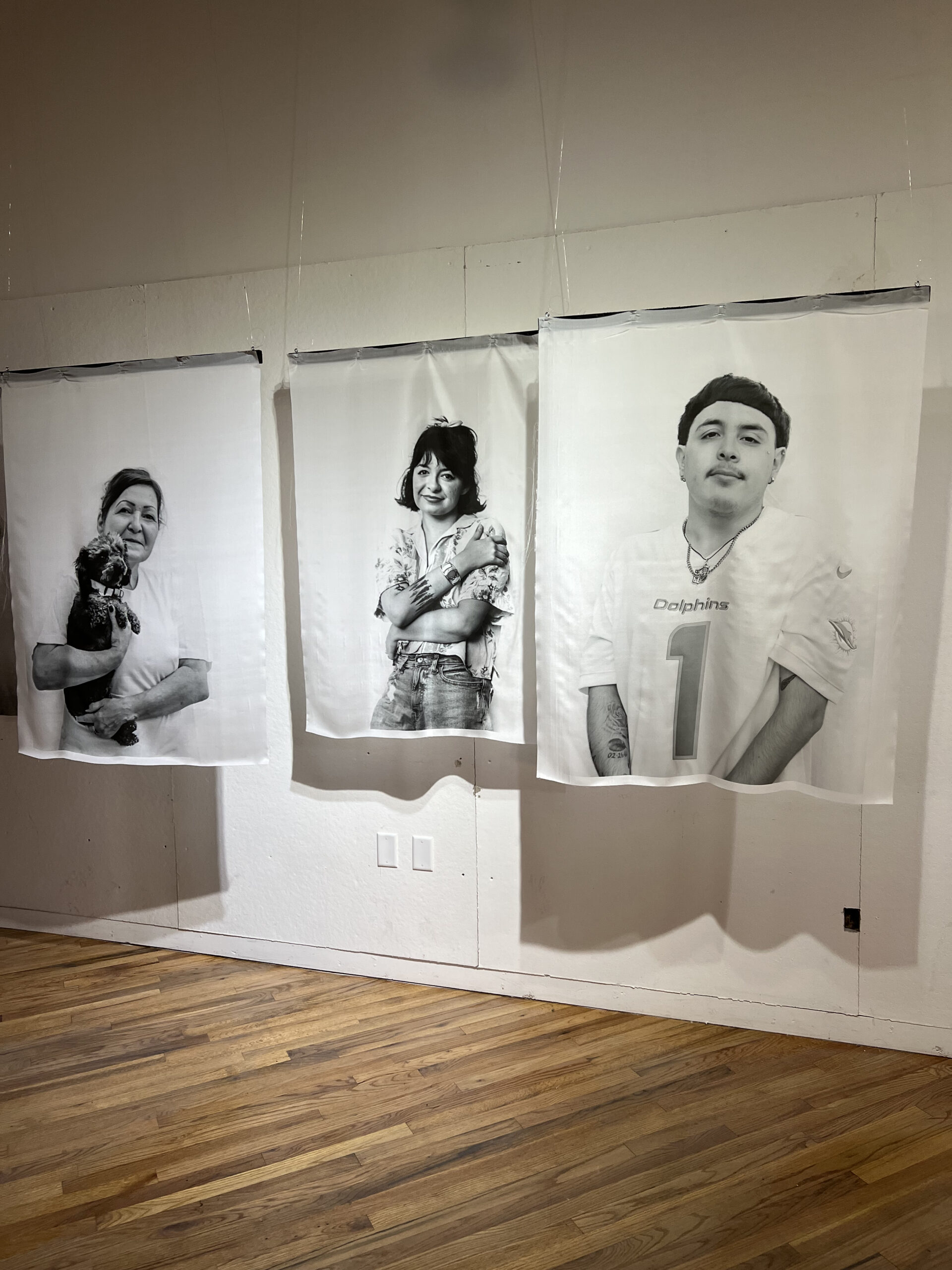
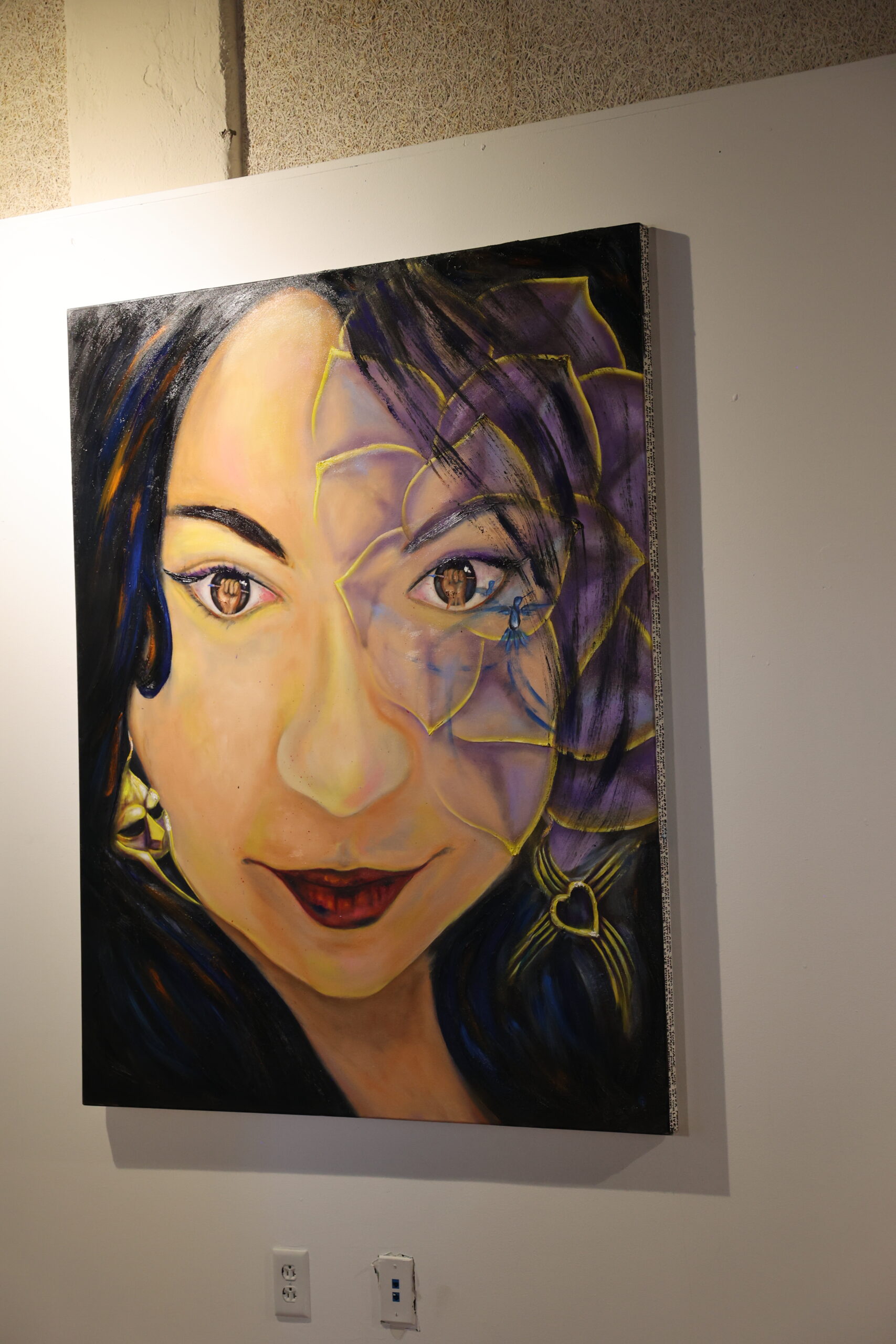
Through a compelling popup thesis exhibition, Wyoming Unite explores the intersection of Wyoming’s rugged individualism, vast landscapes, and mental health struggles, centering the voices of survivors of suicide. This deeply personal and evocative project includes a series of mixed media paintings, and collaborative photo portraits providing a platform for individuals to share their experiences and break the silence surrounding mental health.
“This research is more than a thesis—it’s an act of social praxis,” says Lovato. “Art has the power to create space for healing, connection, and critical dialogue in ways that traditional research cannot. By engaging with storytelling and creative resilience, we can challenge stigma and build momentum for a more compassionate and connected future.”
The project culminates in a public popup exhibition and thesis defense at the University of Wyoming Art Museum on Thursday, April 17, 2025. The pop-up exhibition will be open from 6:00–9:00 PM, with the thesis defense scheduled for 7:30 PM. This will be a free community event with food provided by UW catering. The museum is located at 2111 East Willett Drive, Laramie, WY 82071. This event is a call to action for Wyomingites, researchers, artists, and mental health advocates to come together in a shared effort to address the state’s suicide crisis with empathy and innovation.
By fostering local partnerships and community engagement, Wyoming Unite seeks to spark lasting change—making the invisible visible and proving that art is not just a form of expression but a catalyst for transformation and suicide prevention.
For media inquiries, interviews, or further information, please contact Gerald Lovato at glovato2@uwyo.edu or 619-881-7960
Diversity Univeiled: An American Mosaic
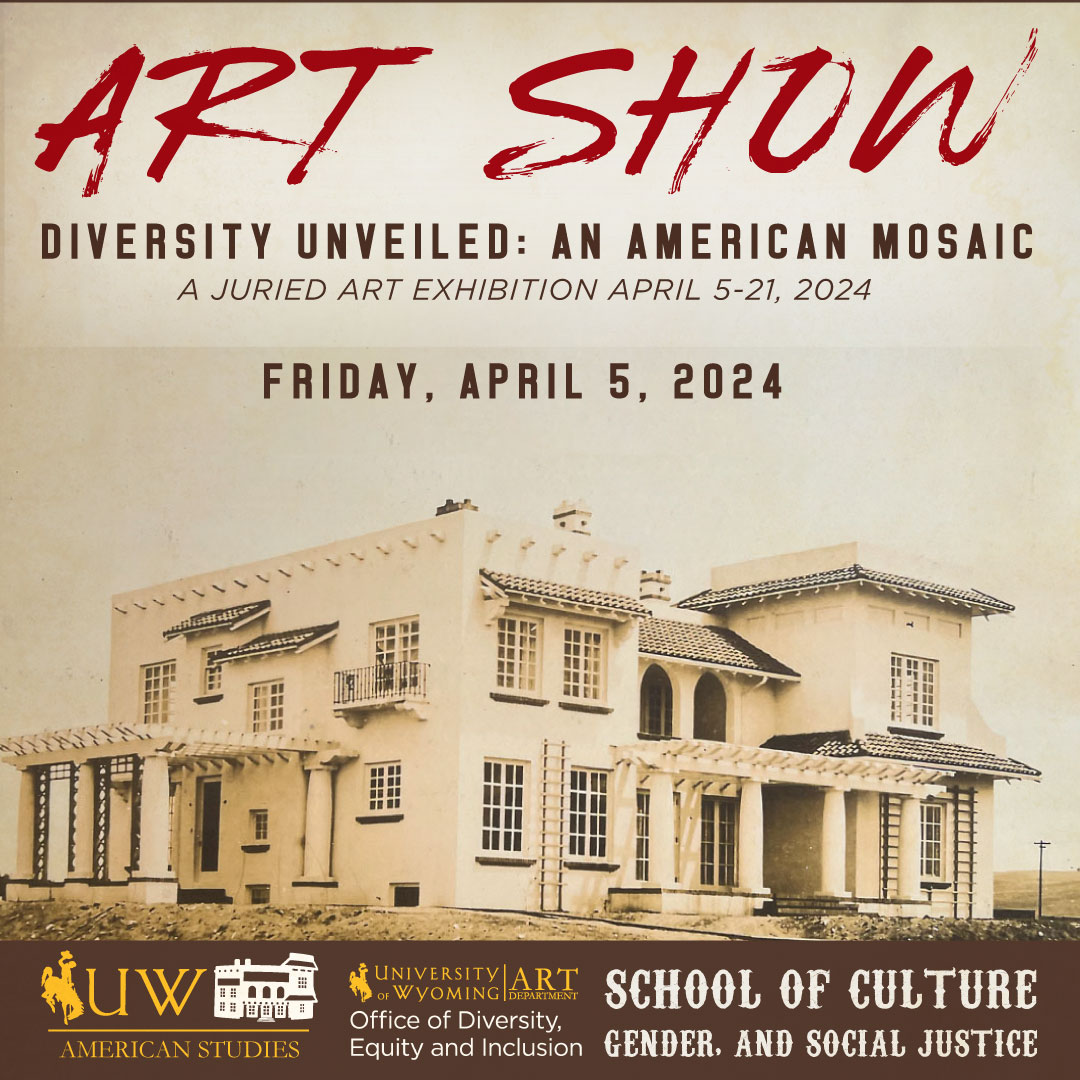
Step into the Cooper House Mansion for “Diversity Unveiled, An American Mosaic”!
Opening April 5, 6:30pm @ The Cooper House (15th & Grand Ave)
This exhibition will spark dialogue on unity in our diverse American experiences. Explore art, research, and conversations that push the boundaries of diversity , equity, and inclusion. Don’t miss this vibrant showcase curated by artist and American Studies scholar Gerald Lovato! #DiversityUnveiled #AmericanMosaic #DEI #artshow
Neltje Soup: SOK Gallery
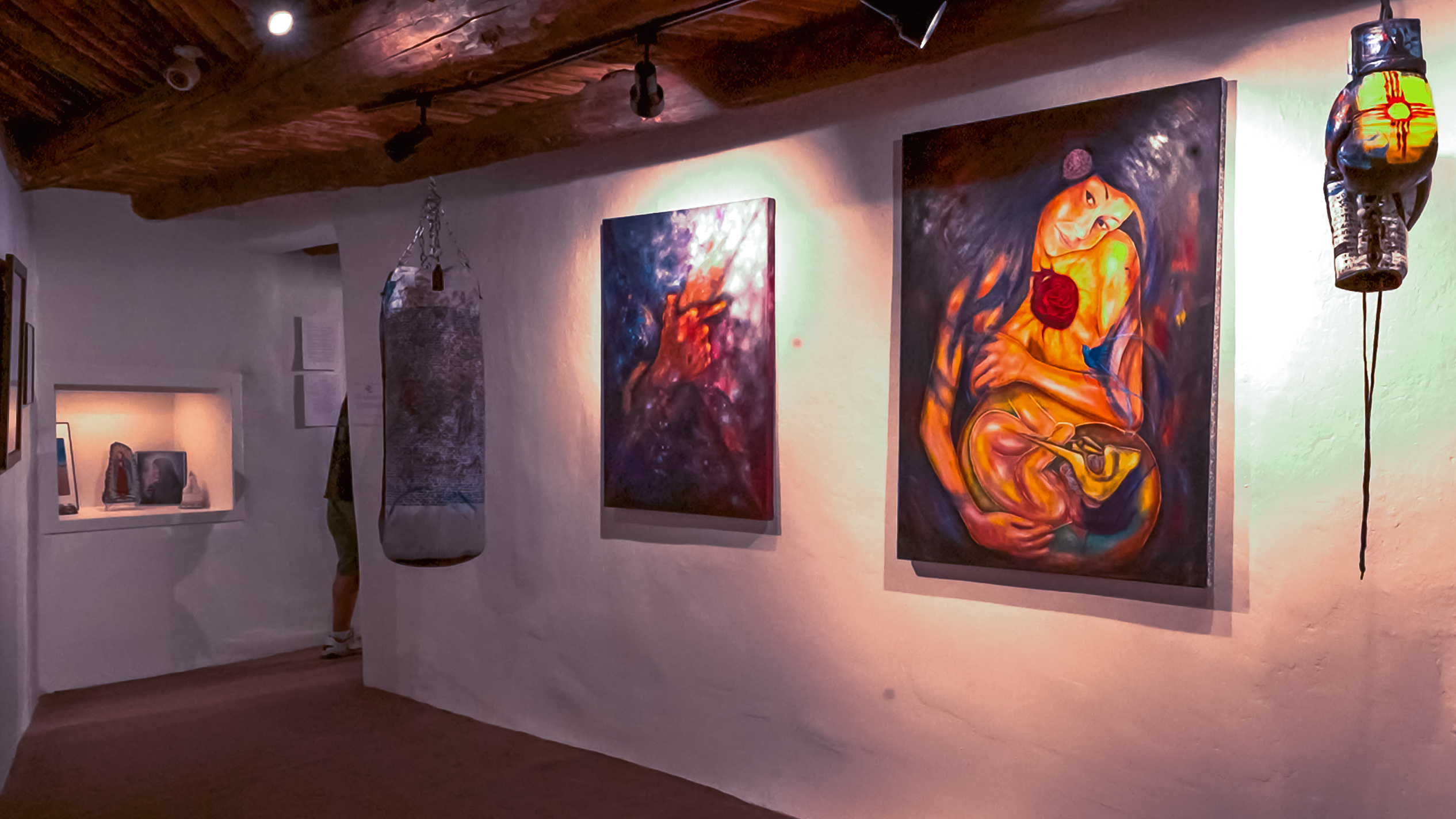
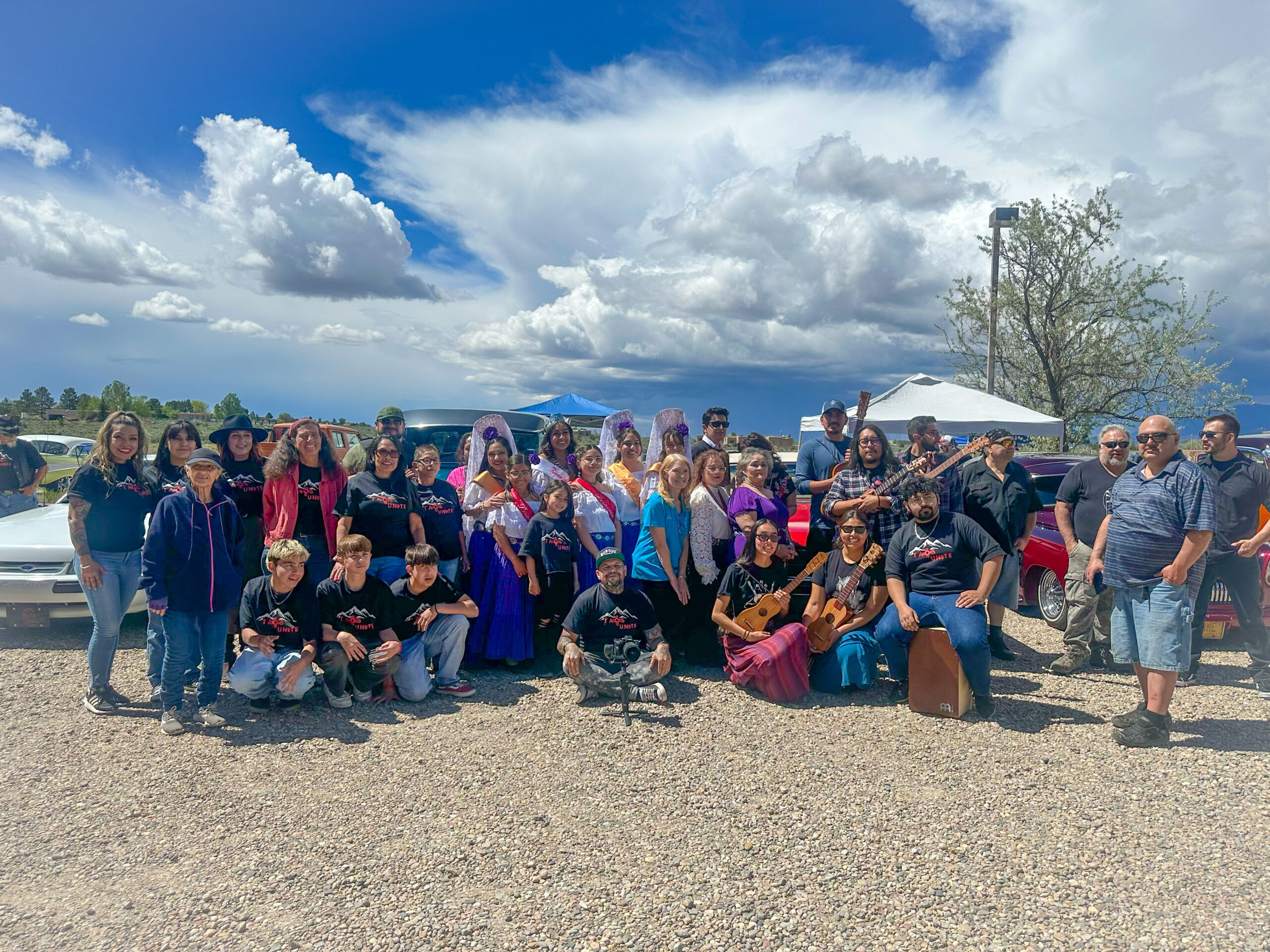
TAOS UNITE WAS A SUCCESS!
Taos Unite Letter from Frederick Aragón:
Taos Unite opened my eyes to the suffering of my surrounding community of like-minded, good-hearted people. All of us are different, yet we experience the same emotions, including guilt–whether we have seen someone’s drug use and anticipated the worstoutcome, or whether we havebeen unable to help the person and the worst has come to pass.
Taos Unite showed me I am not alone in my love for these family membersand friends. What to do? Listening to people tell theirstories provesthat we have a problem that affects many and that we need a solution.Maybe together we can find one.
Frederick Aragón
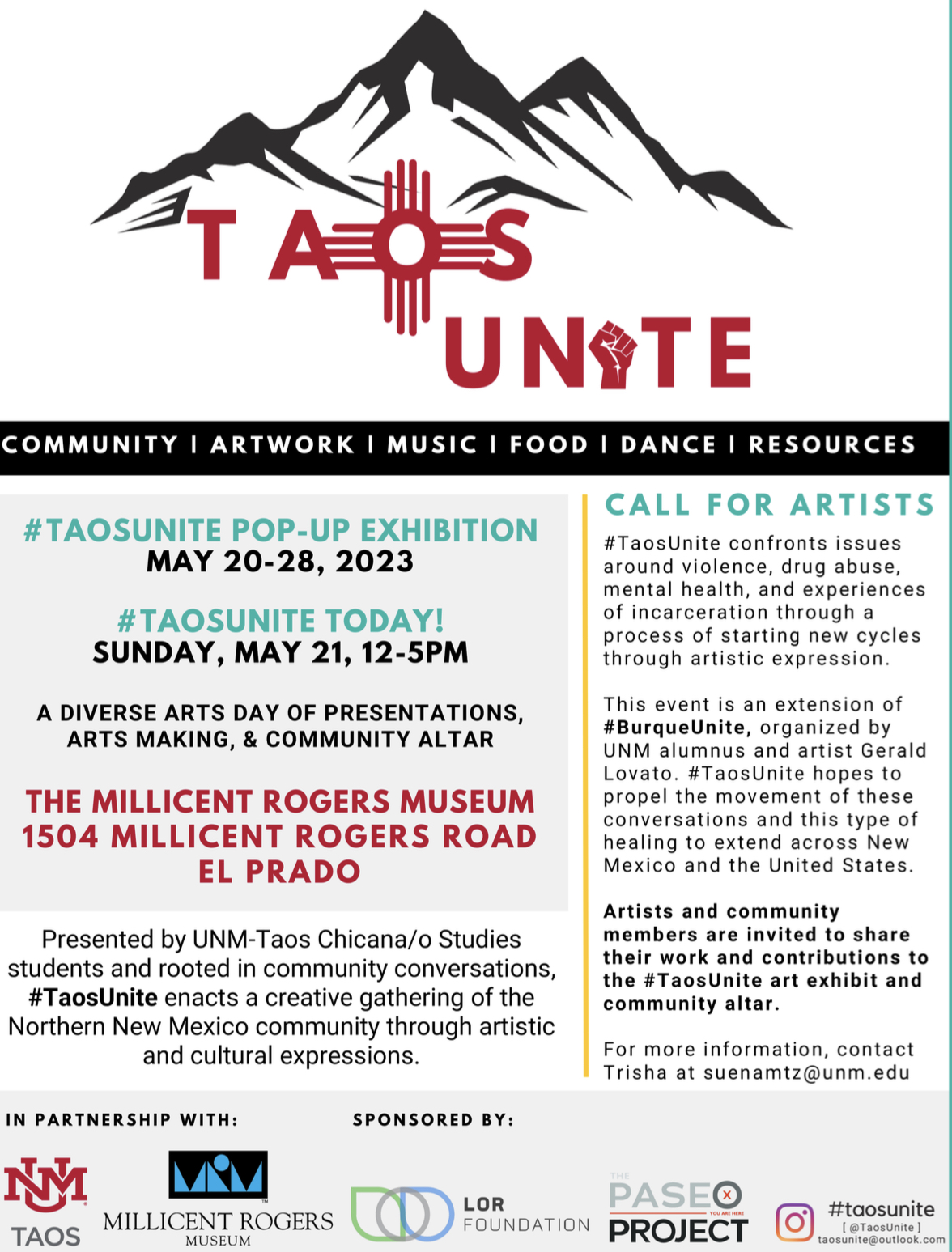
TAOS UNITE EXHIBITION CATALOGUE
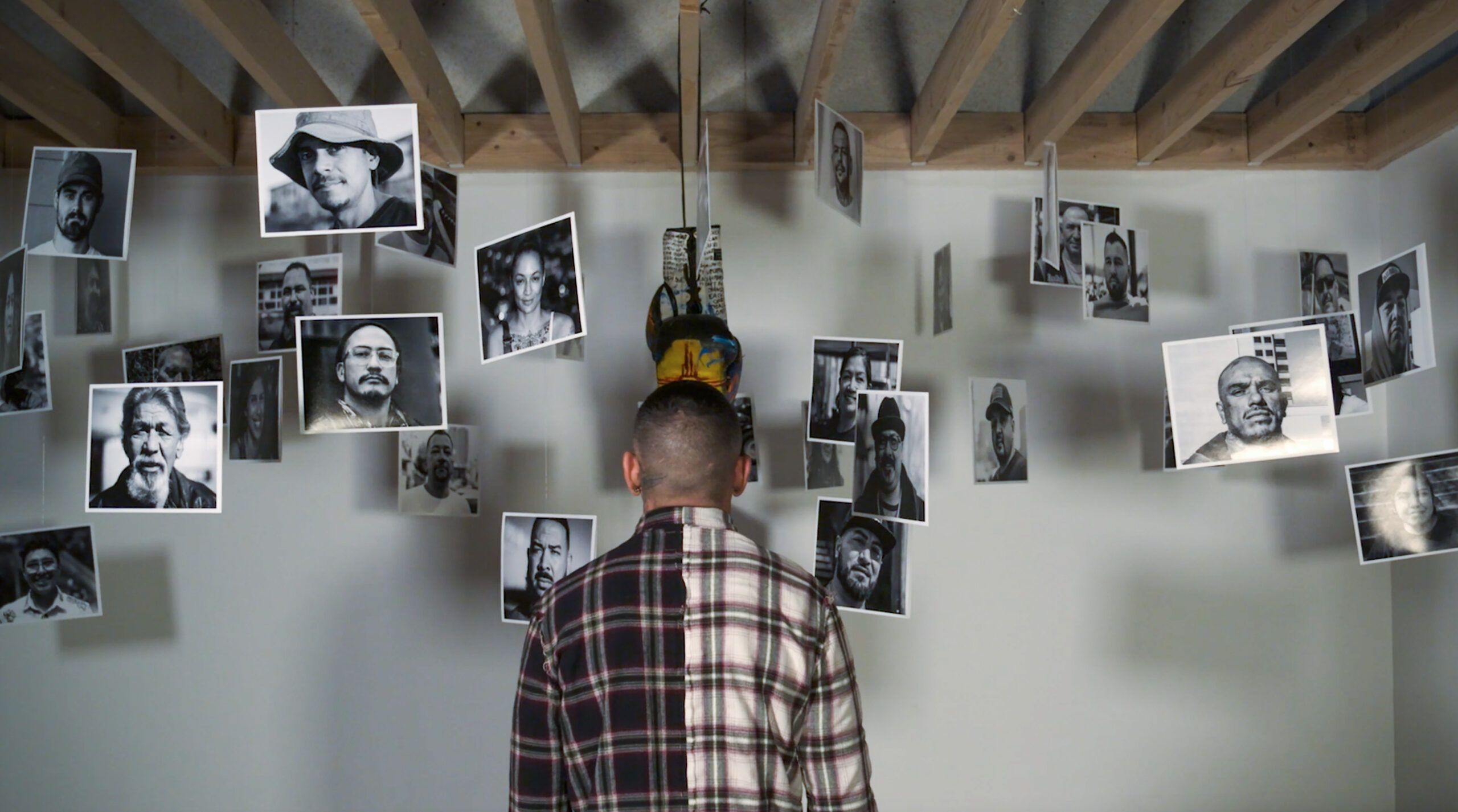
Burque Unite Exhibition Catalogue
PRESS RELEASE
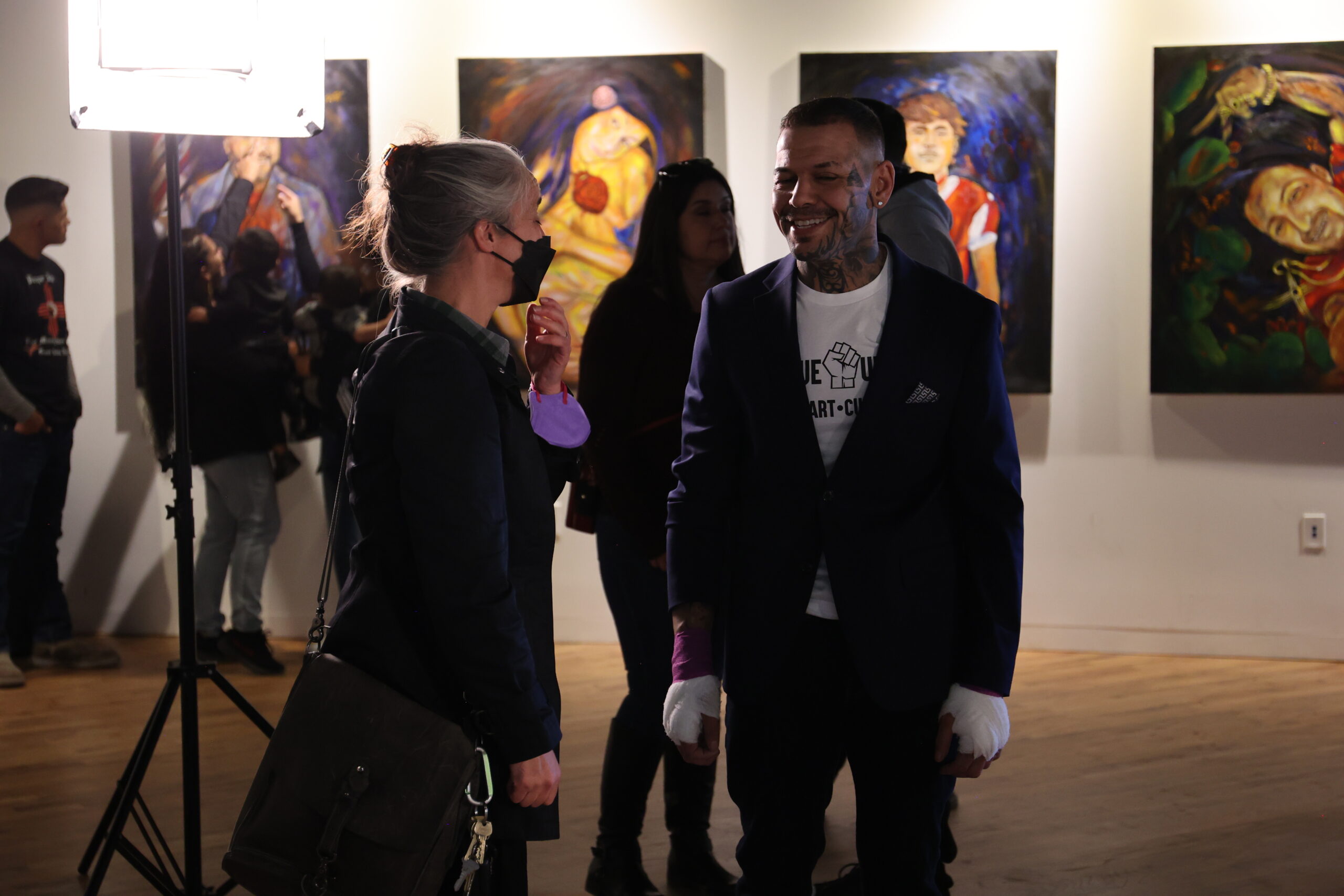
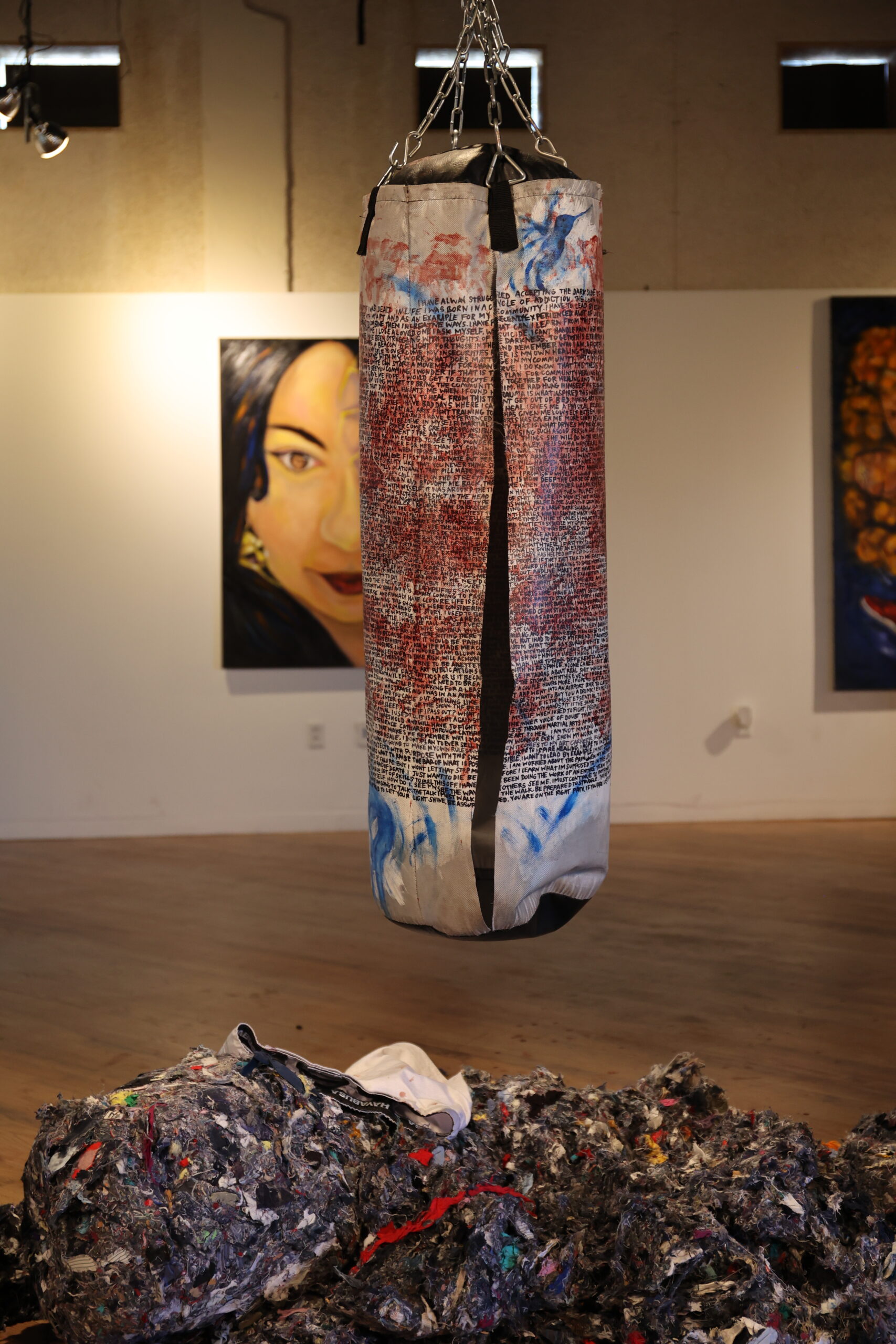
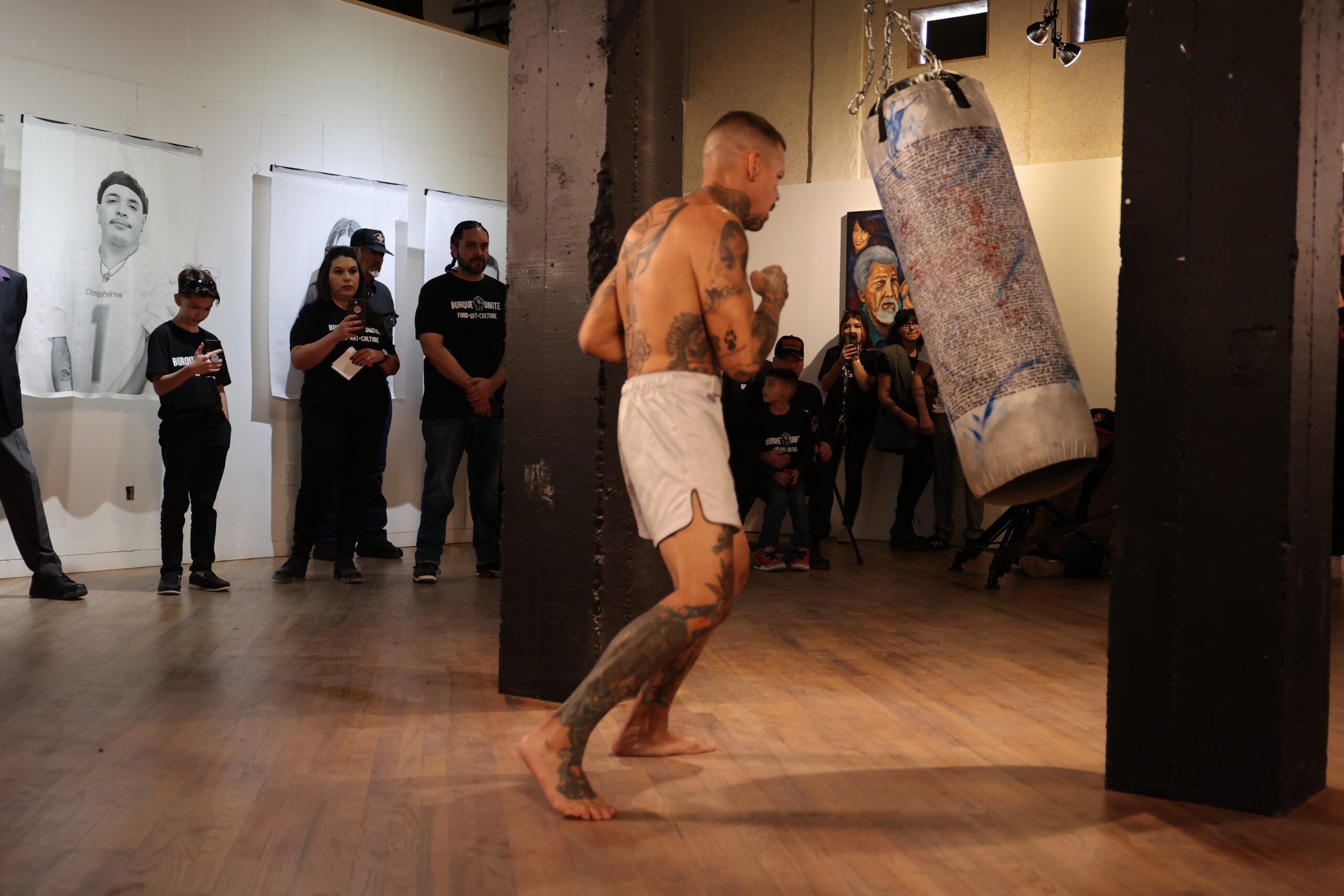
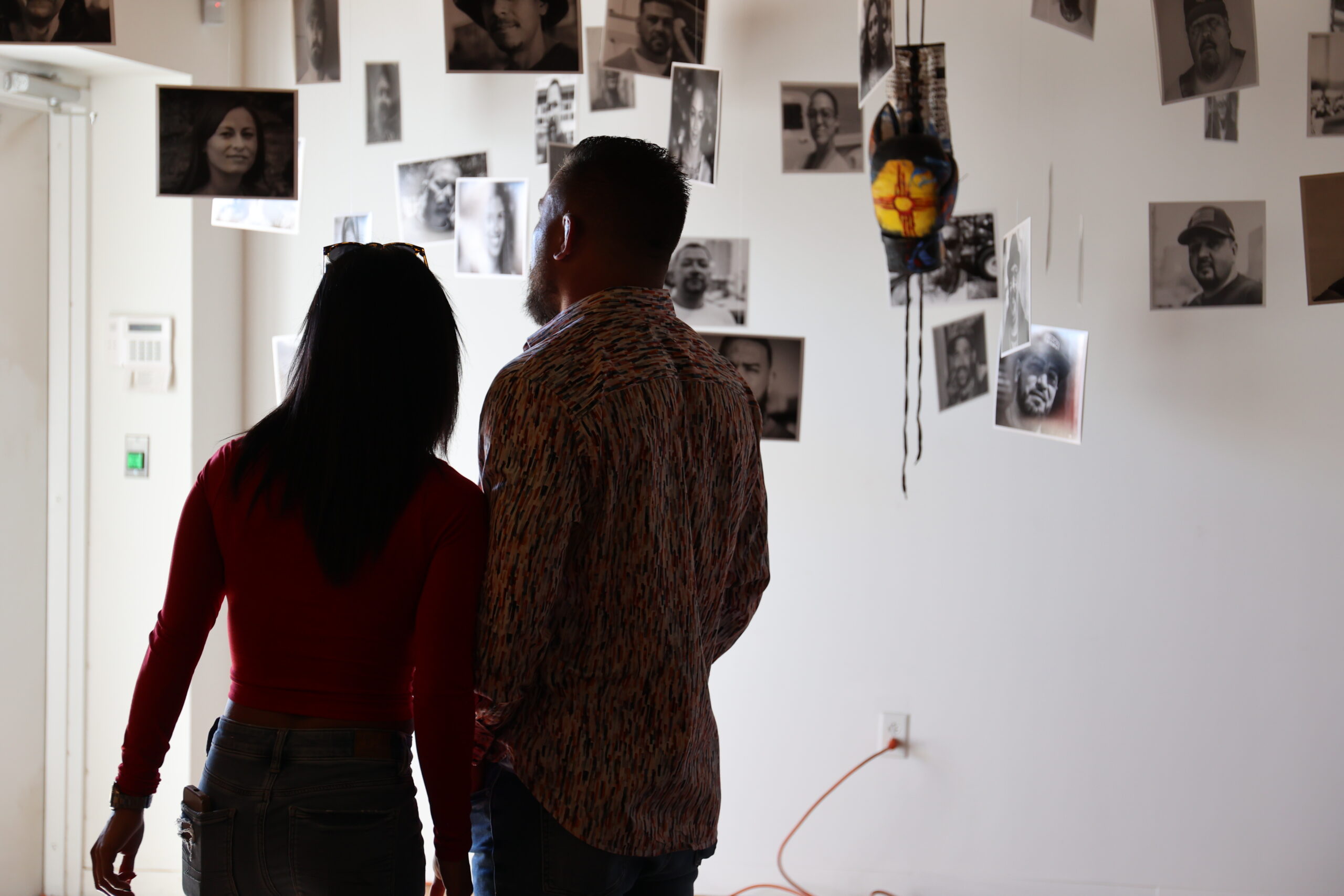
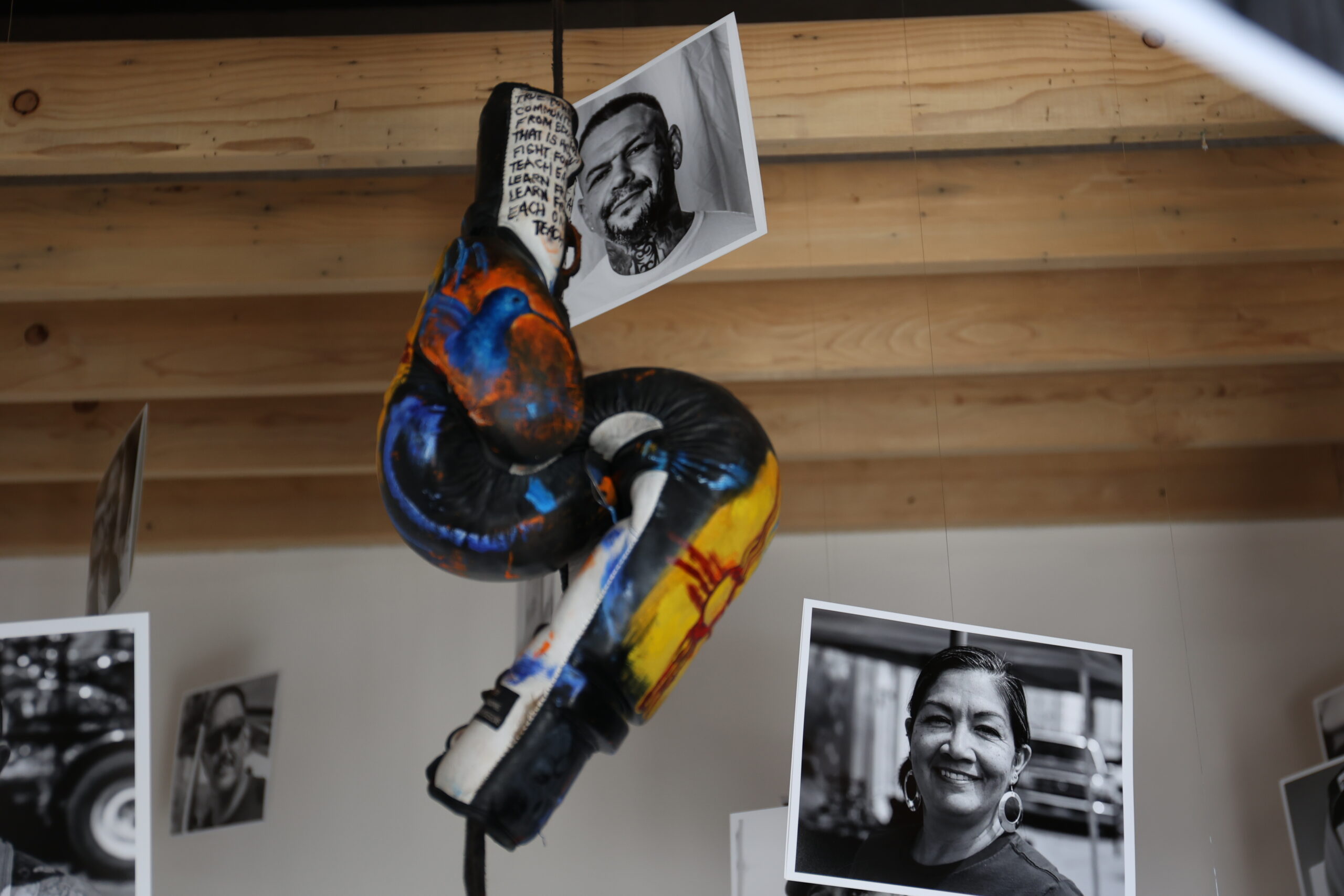
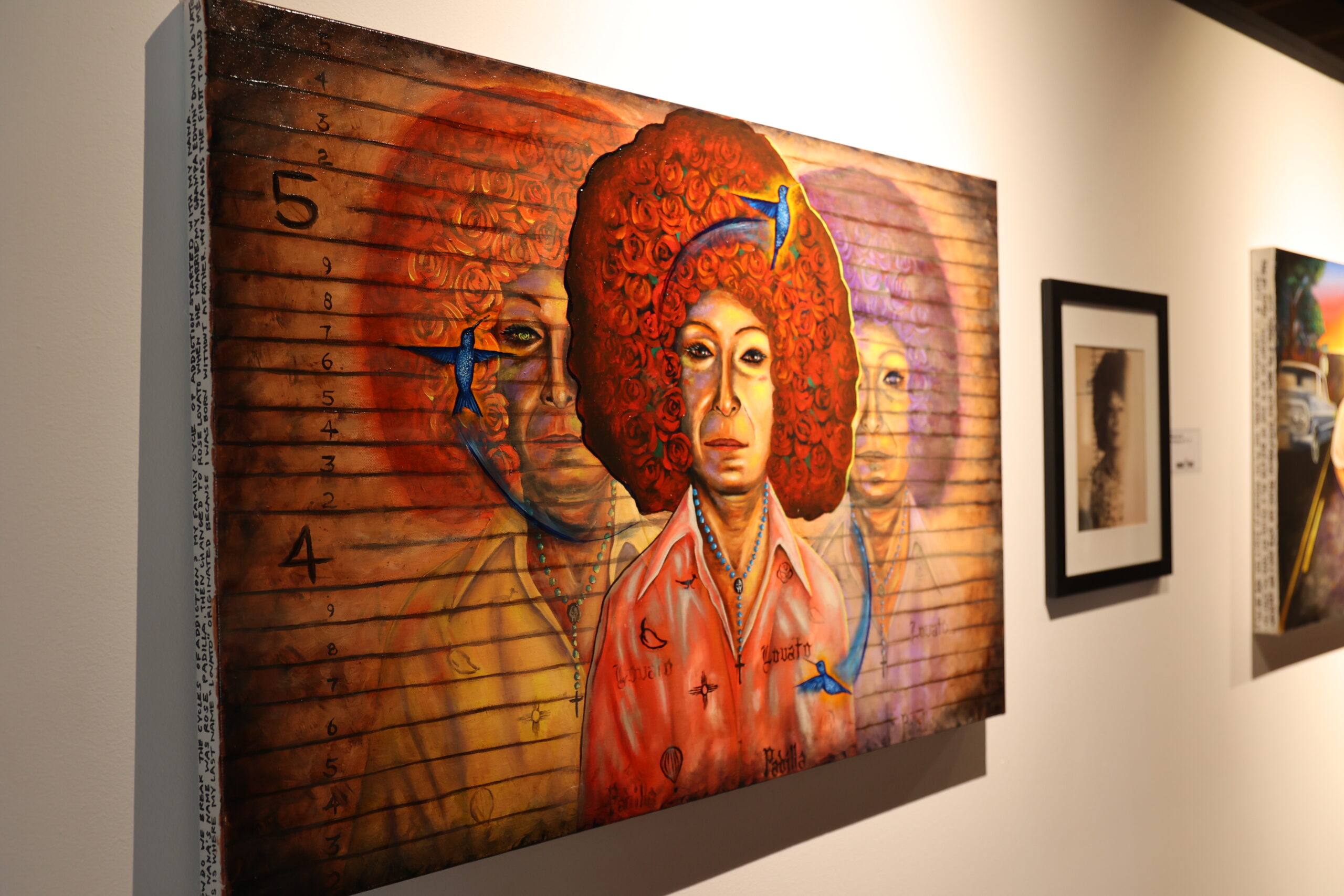
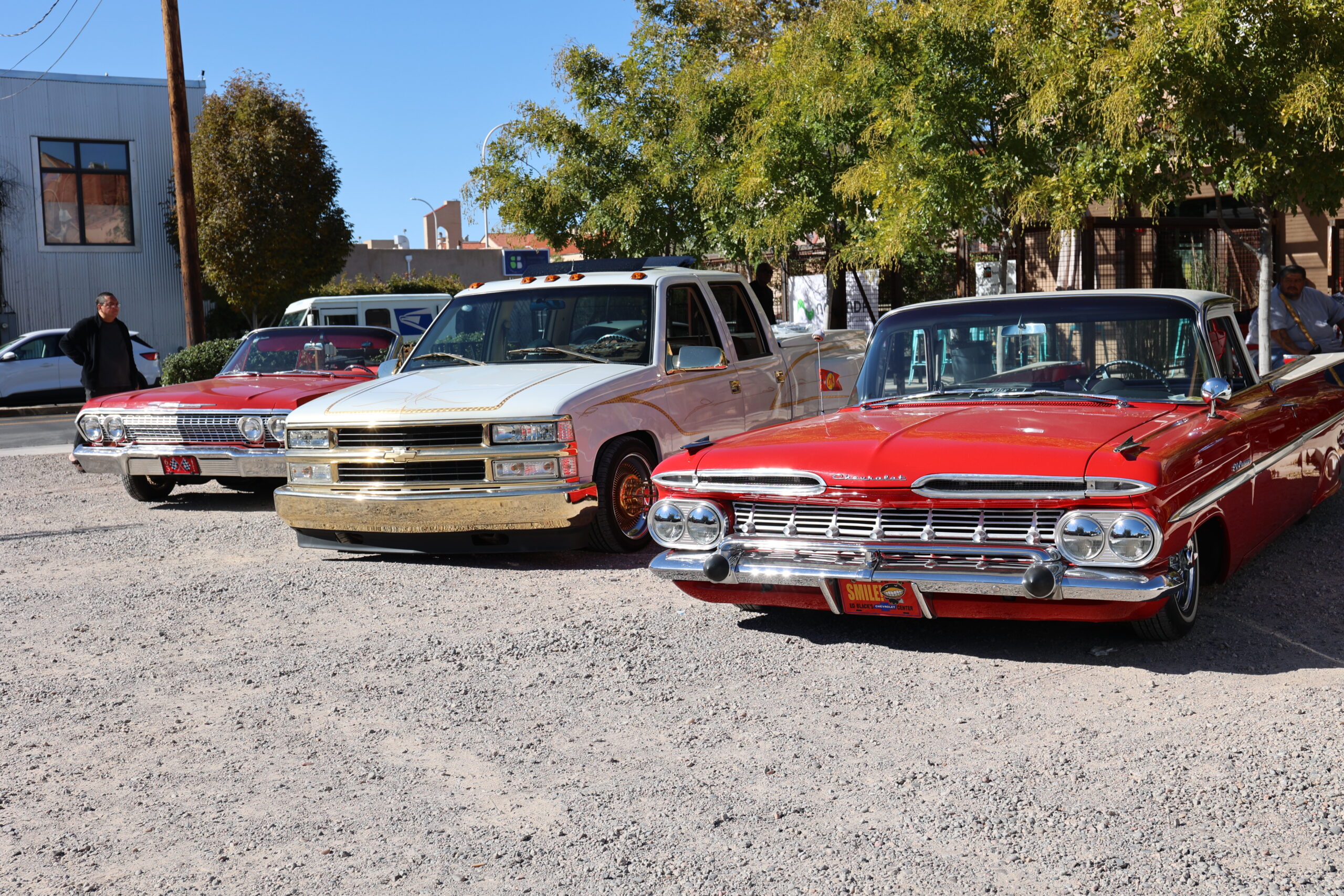
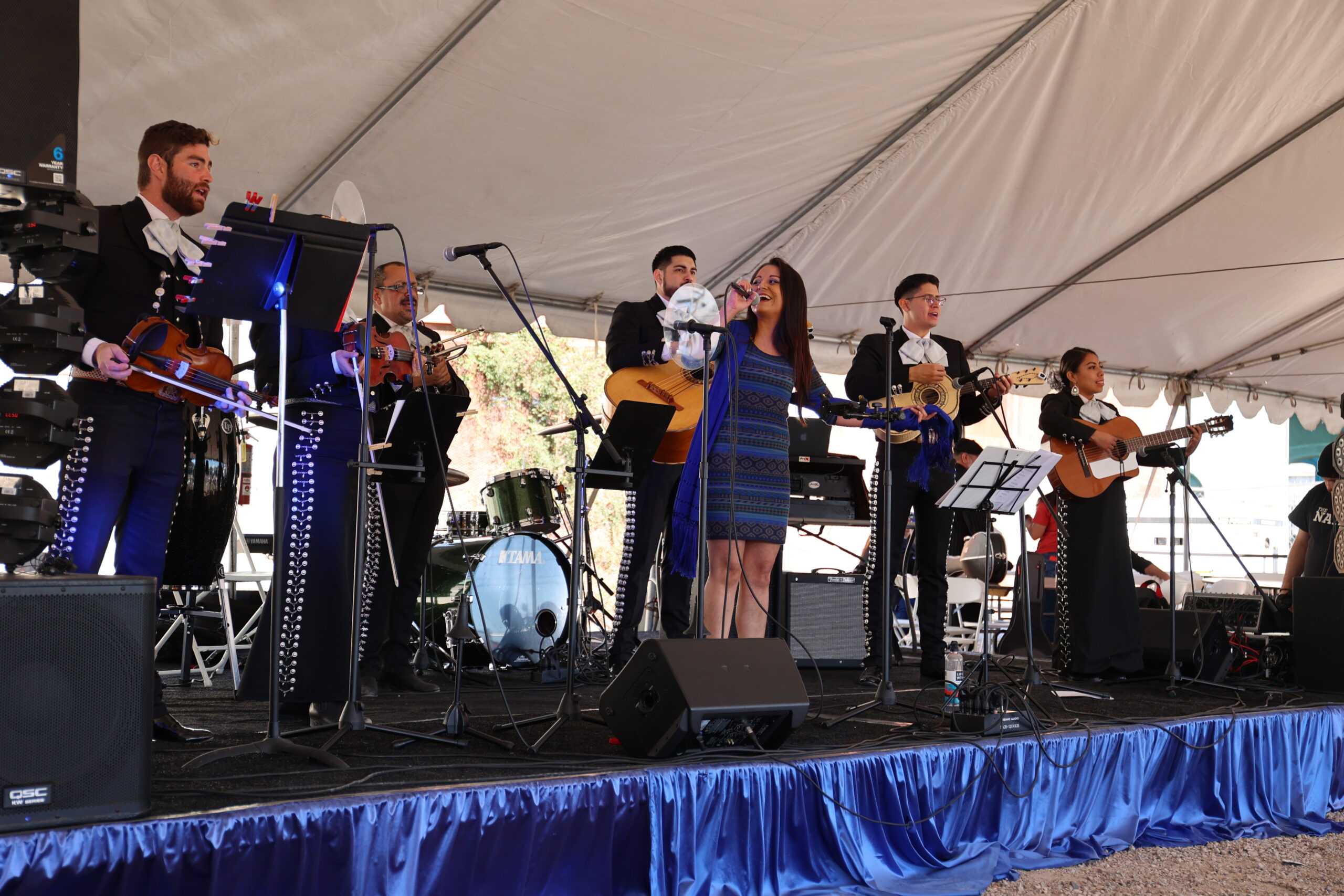
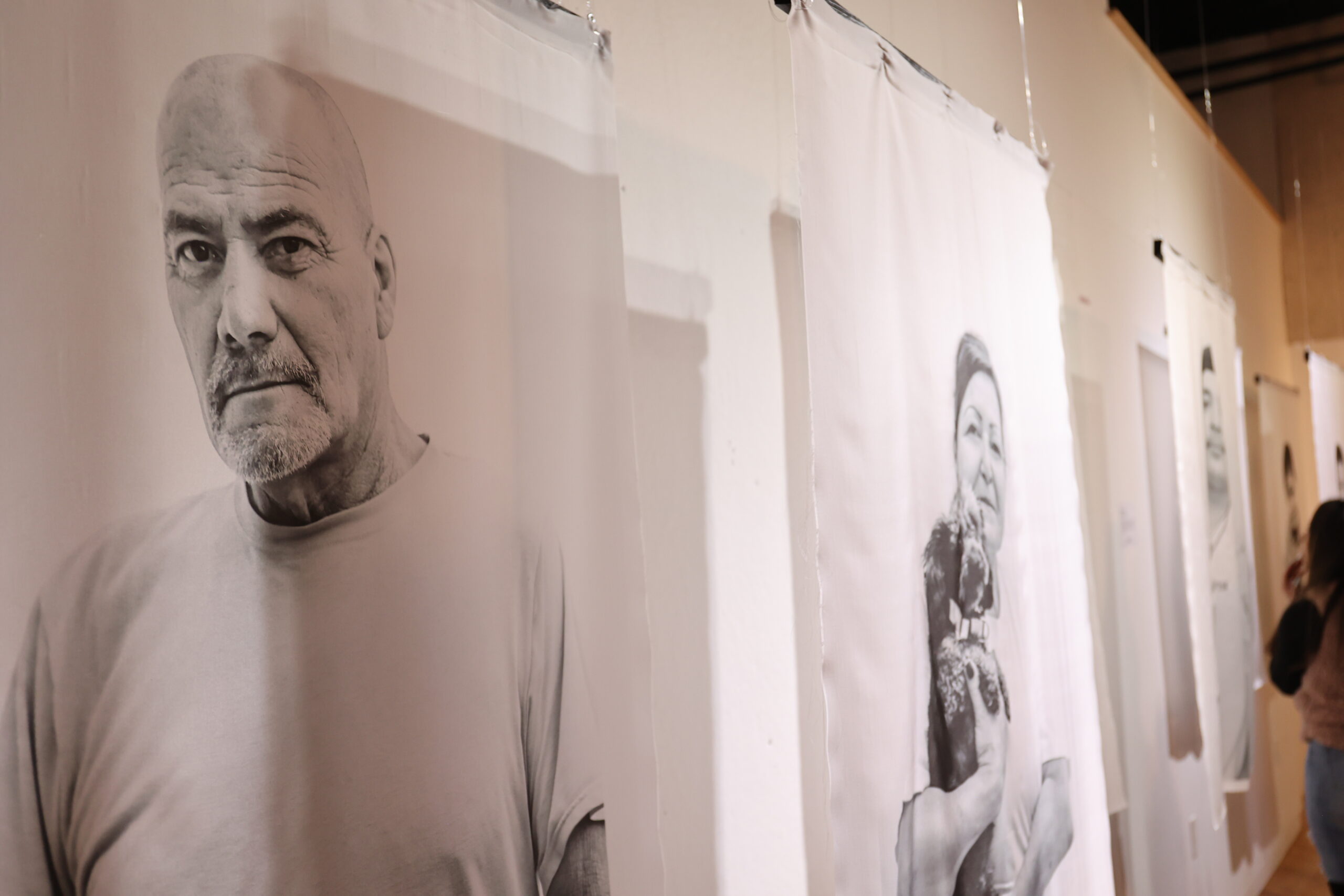
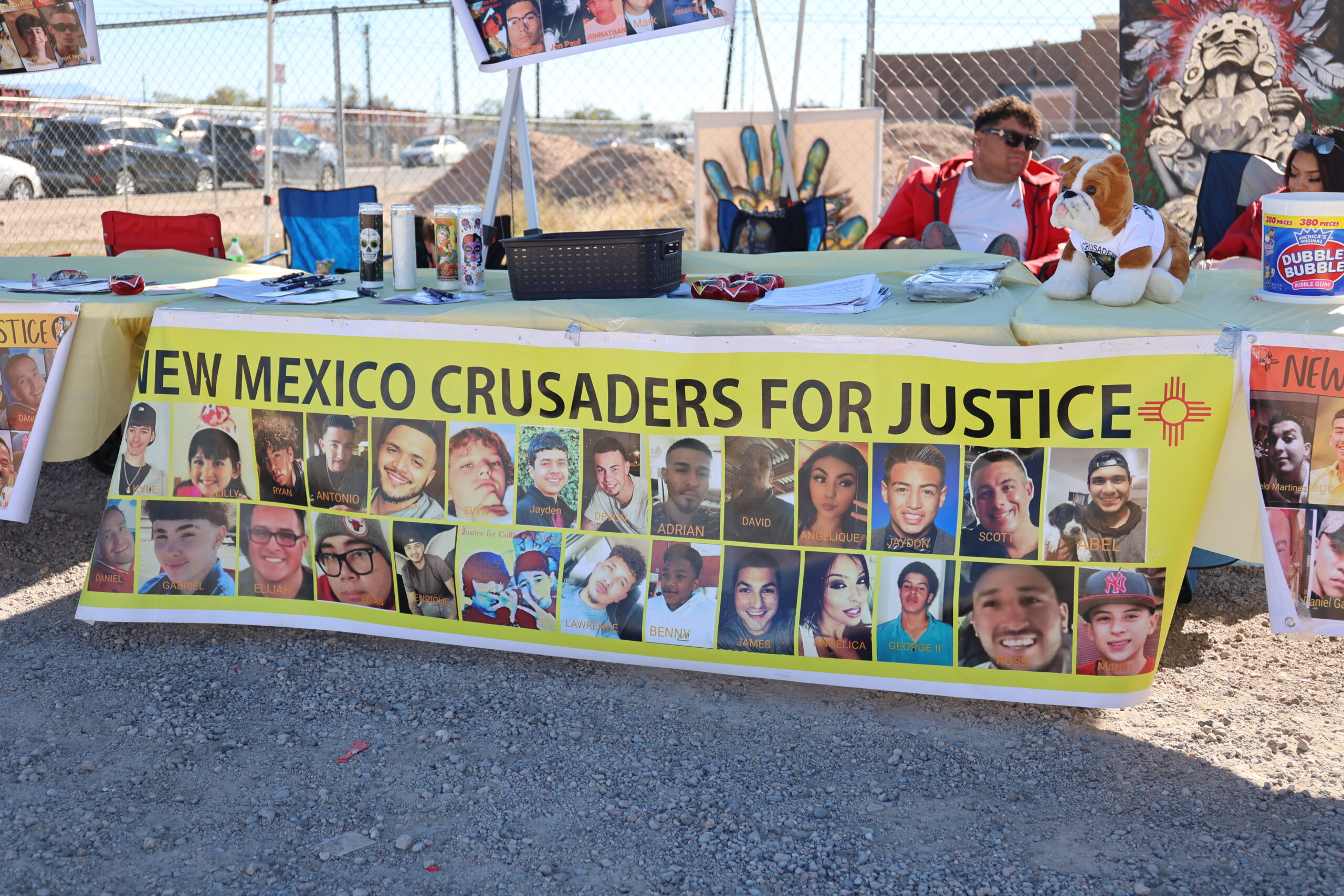
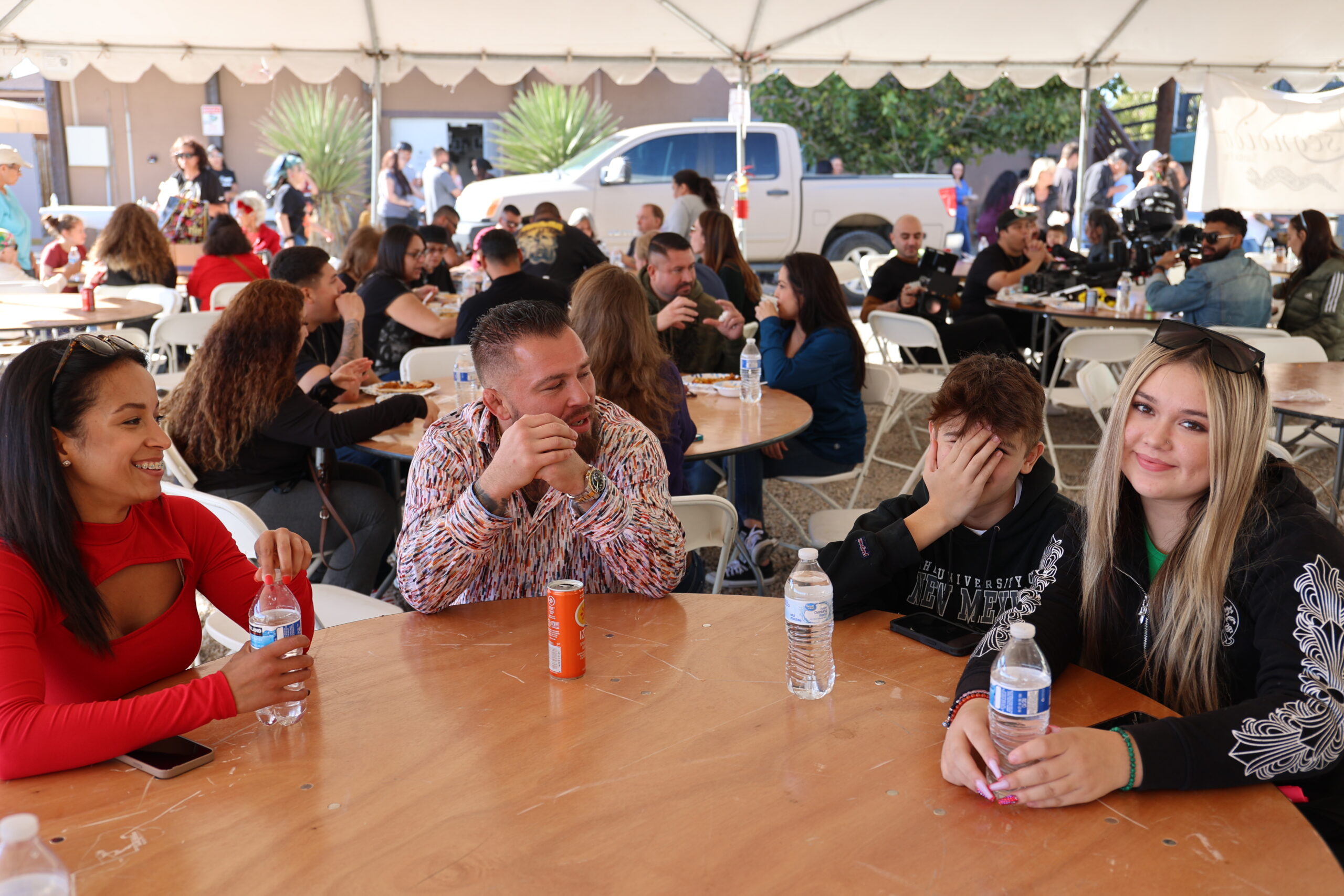
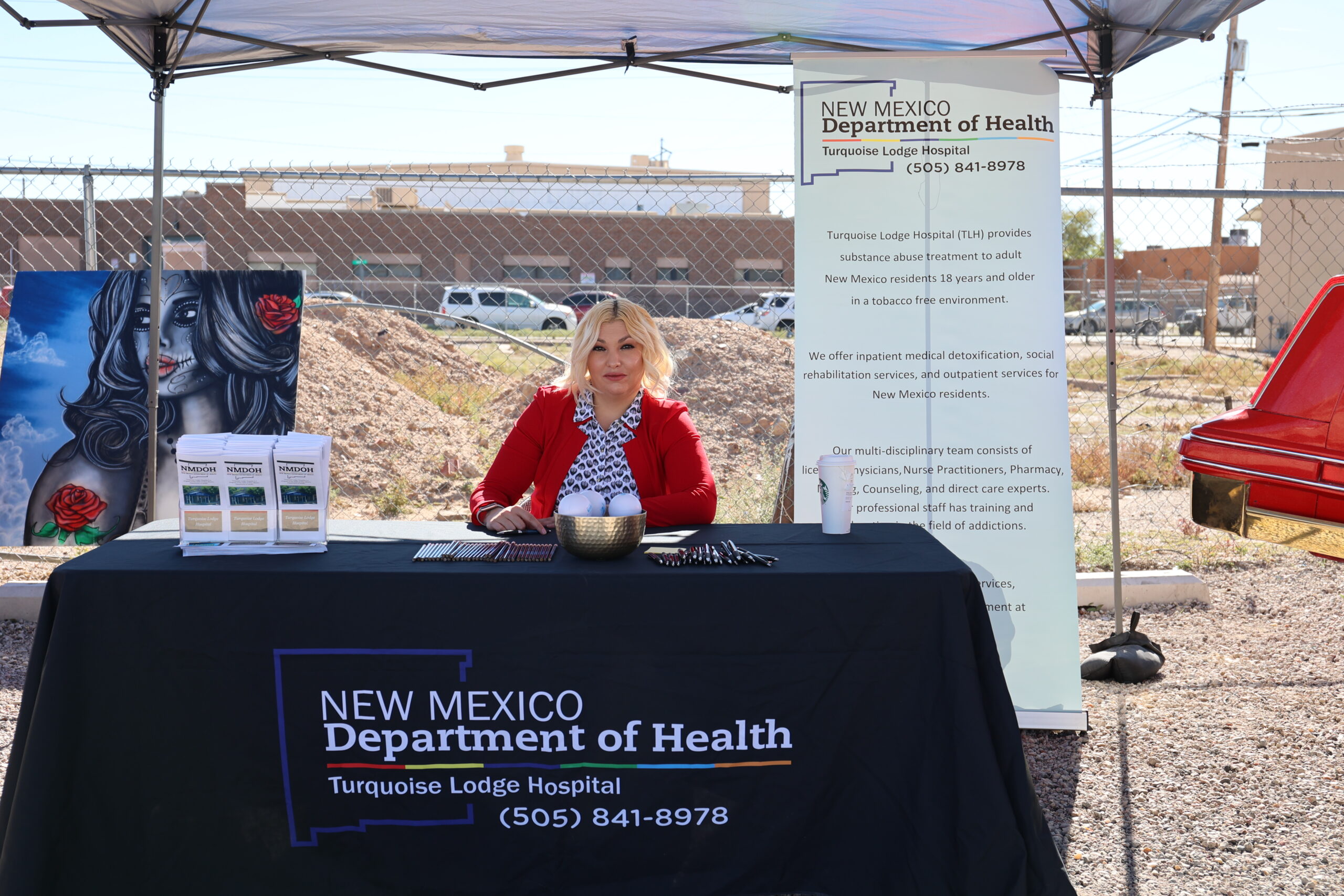
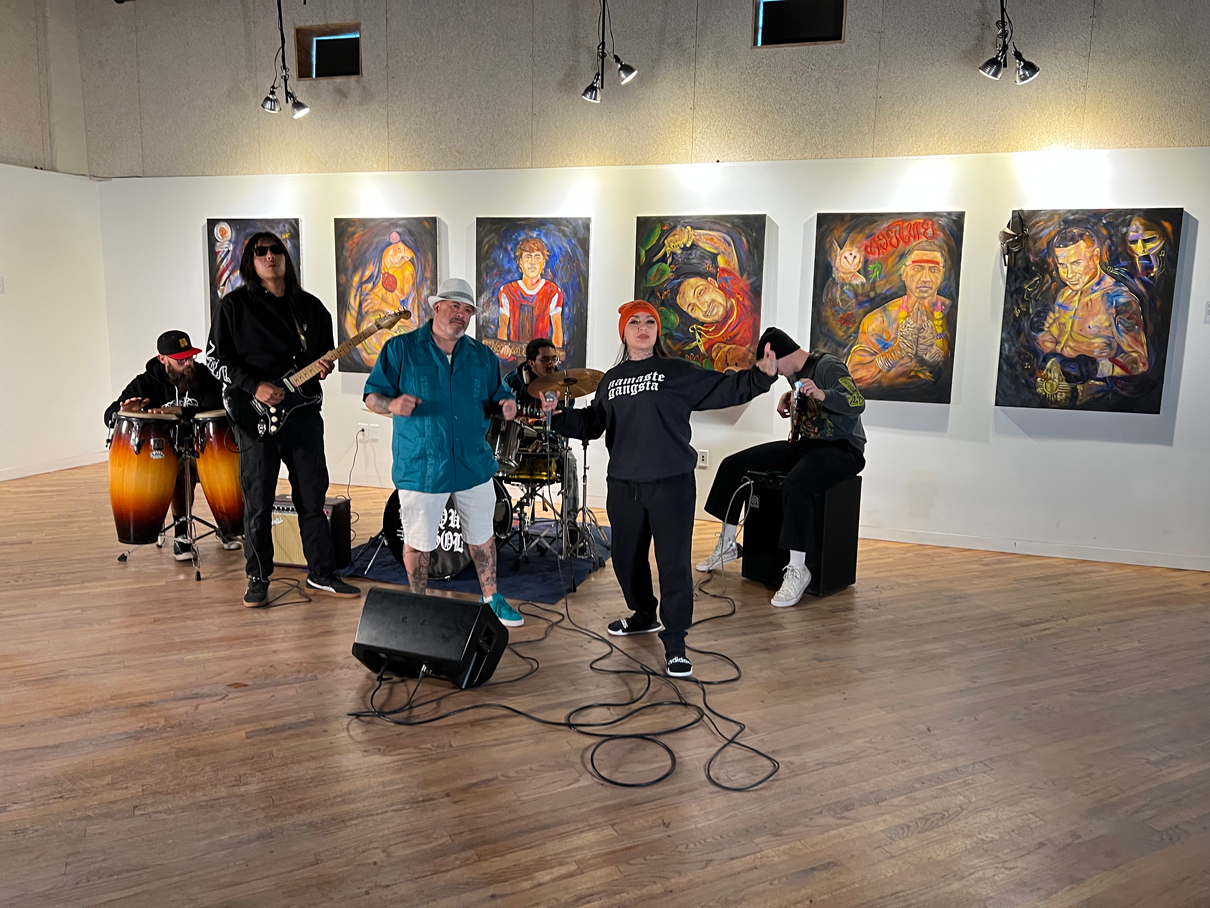
January 16, 2023 – The exhibition catalogue for Burque Unite has been published and is available for purchase or download. The Catalogue follows Burque Unite, a University of New Mexico Honors Thesis exhibition and community healing event by artist Gerald Lovato. The event included a full day of programming with live music, free food, behavioral health resource vendors, a multimedia gallery installation, and a live performance. This Catalogue documents the exhibition and the artwork presented with essays written by artists, art historians, and curators who attended the event. The contributors included Augustine Romero, Alana Coates, Shelby Roberts, Jen DePaolo, and Manuel Gonzalez.
Keywords: Conceptual Art, Behavioral Health, Suicide, Drug Addiction, Recovery, Trauma, Healing, Catharsis, Community, Artistic Intervention, Artivism, Social Praxis

Burque Unite Event Reflection
Albuquerque, NM (November 14, 2022) – The community really pulled together to help me pull off this event, which exemplified the community concept of the show. I believe the most powerful piece in this exhibition was the Fight for Change performance piece which a lot of people missed. It was a “had to be there” kind of performance. I was told it was powerful and I have hopes that when the documentation of this event is released, it will have an echoing effect with an impact lingering on.
Dear Burque,
I shared a special moment of catharsis with you, which gave me peace within myself by letting go of that pain in my journey for personal growth. I hope what I gave you will have a lasting effect and inspire your own healing. Ultimately, I hope this exhibition has shown you what is possible in the fight for change. I hope it helped to break the stigma around these conversations. I love you Burque! Thank you for your support.
P.S. Stay tuned for the exhibition catalog book and documentary film to be released soon!
Con amor y respeto,
G
PRESS RELEASE
Albuquerque, NM (October 1, 2022) – Homewise is pleased to present Gerald Lovato: Burque Unite, a University of New Mexico Honors Thesis exhibition, and community healing event. The exhibit will be open to the public Saturday, October 29, 2022, from 11:00 am – 7:00 pm at the Community Art Gallery located within the Orpheum Theater at Homewise at 500 2nd St. SW, Albuquerque, NM.
The exhibition will be accompanied by a full day of programming, including a live performance by Lovato which will take place at 11:30 am, followed by an artist talk at 12:30 pm. In addition, free food will be provided during the special Interactive Community Feast (and community forum) which will be held 1:00 – 3:00 pm. The event will conclude with a “Celebration of Life” reception from 3:00 – 7:00 pm. All Burque Unite programming is Free and Open to the Public. Publication to follow.
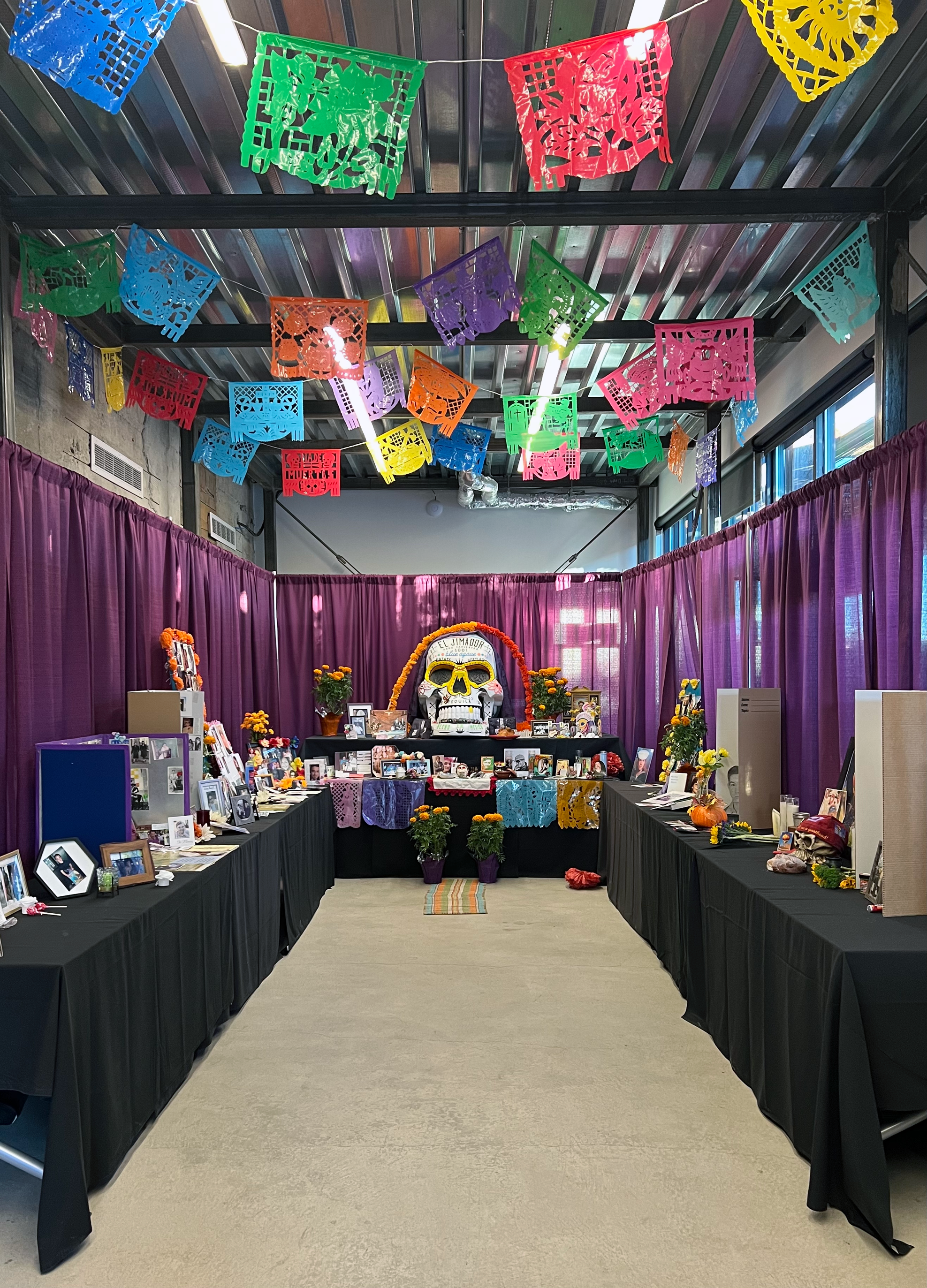
Lovato’s work aims to break the stigma around behavioral health, and posits as a reminder that change, recovery, and violence prevention is possible. The multimedia exhibition and accompanying events aim to be a safe space for community interaction and healing. Using art as a catalyst for creating conversations between youth, adults, and elders throughout Albuquerque. Community members are encouraged to share their stories and participate in Dia de los Muertos altar installation by bringing photos and ofrenda objects for their loved ones.
“Albuquerque is at an all-time high in violence, drug addiction, and suicide post-pandemic and we need healing,” states Gerald Lovato, Bachelor of Fine Arts, the University of New Mexico
Gerald Lovato is an Albuquerque native and interdisciplinary artist whose work focuses on the themes of drug addiction, violence, suicide, and mental health. Before studying visual arts, Lovato used martial arts to cope with trauma, which led to a successful 10-year career as a professional mixed martial arts fighter competing nationally and internationally. Lovato now uses visual arts for coping/ healing and works in the mediums of painting, photography, sculpture, electronic art, film, and installation. Each medium provides a different opportunity and invitation for catharsis, both for him and the viewer.
Thank you to our sponsors: Bernalillo County District 3, Commissioner Adriann Barboa, Nusenda Credit Union Foundation, Escondido Restaurant, Invigorate Roofing, and Homewise.
If you have questions about the event please contact geraldlovato78@gmail.com